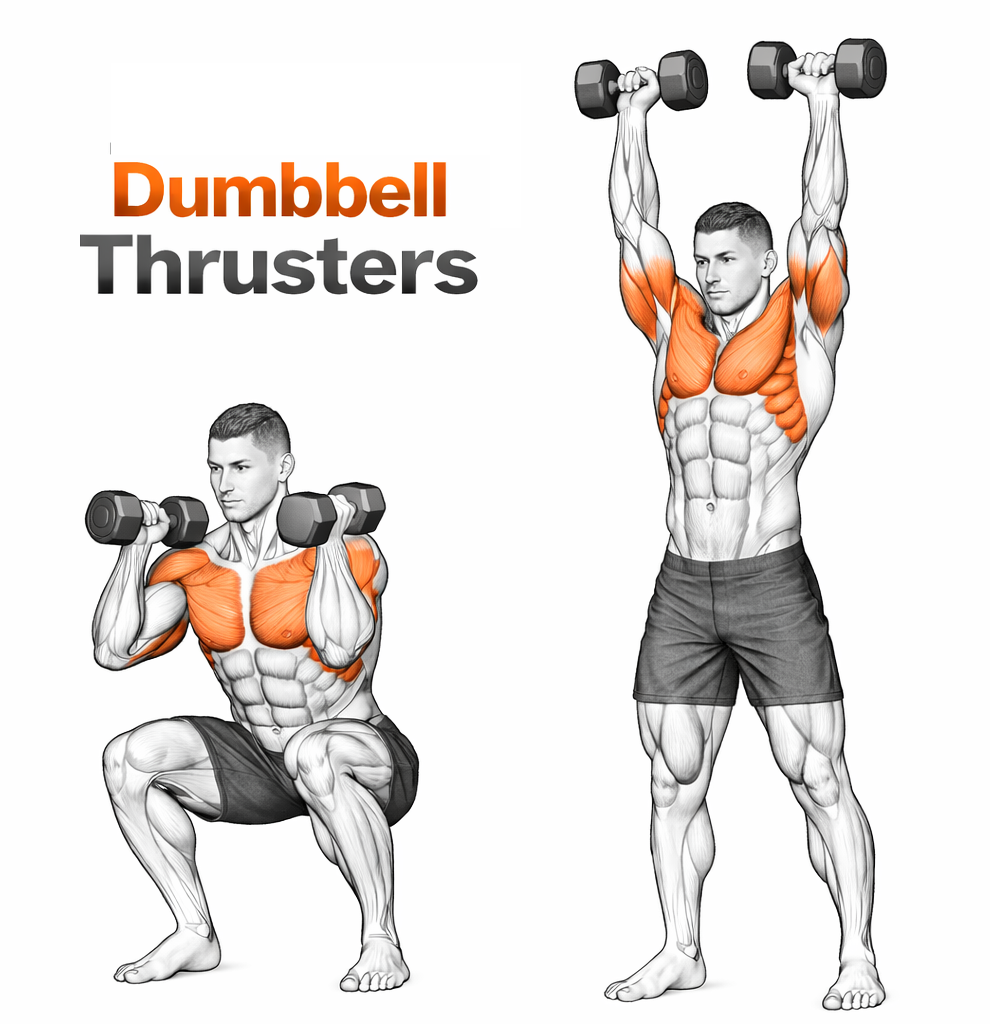
Dumbbell Thrusters
Two-dumbbell thruster — full squat into overhead press in one motion, the most cardiovascularly demanding dumbbell lift.
Level: Intermediate
Primary: Full Body Shoulder
Movement: Compound
Tags: Explosive Olympic Lift Push
Type: Anaerobic Intervals (HIIT / Bootcamp / Circuit) Hybrid Athletic Strength (Weight Lifting)
Equipment: Dumbbell
Sports: Football MMA Rugby
Target muscles
The quads and glutes drive the squat. The deltoids and triceps drive the press. The trunk braces continuously to transfer leg force to the dumbbells overhead. The grip and forearms hold the dumbbells. As a combined movement, the thruster trains the legs, shoulders, and core in one rep — making it among the most efficient conditioning movements available.
How to perform
Setup
Stand with dumbbells at shoulder height, palms facing each other (neutral grip). Feet shoulder-width, toes slightly out. Trunk braced.
Execution
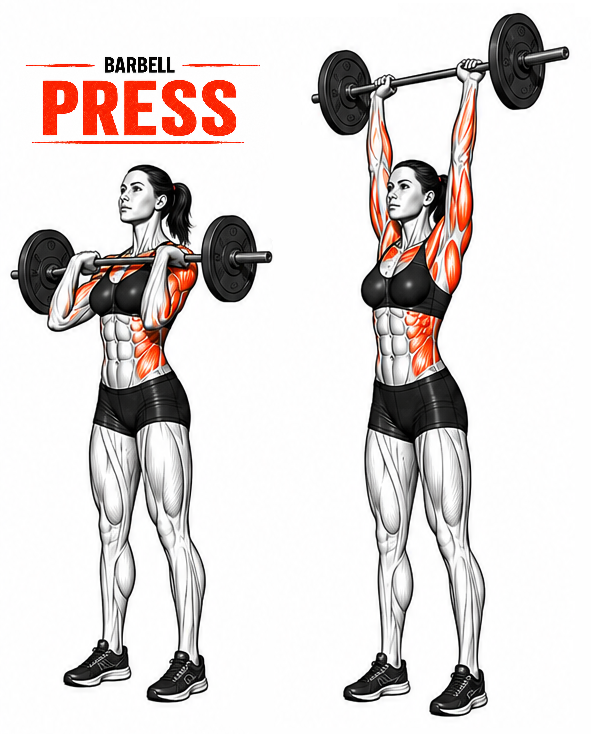
Lower into a full squat — hip crease below the knee. From the bottom, drive up explosively and use the upward momentum to press the dumbbells overhead in one continuous motion. Lock out at the top. Lower the dumbbells back to shoulder height as you descend into the next squat. Continuous flow.
Common mistakes
- Pausing in the rack between squat and press. The leg drive connects to the press.
- Cutting squat depth. Hit honest depth.
- Pressing in a soft trunk. Brace before each rep.
- Going too heavy. The combined movement caps the load.
- Long unbroken sets at high loads. Form deteriorates fast.
Progressions and regressions
Regress to dumbbell front squats and overhead presses as separate exercises. To progress, work for time, EMOM format, or move to barbell thrusters.
Programming notes
Excellent power-endurance lift. 3-4 sets of 6-12 reps, twice a week. As HIIT conditioning, 30 seconds on / 30 seconds off for 6-10 rounds.