Barbell Landmine Squat
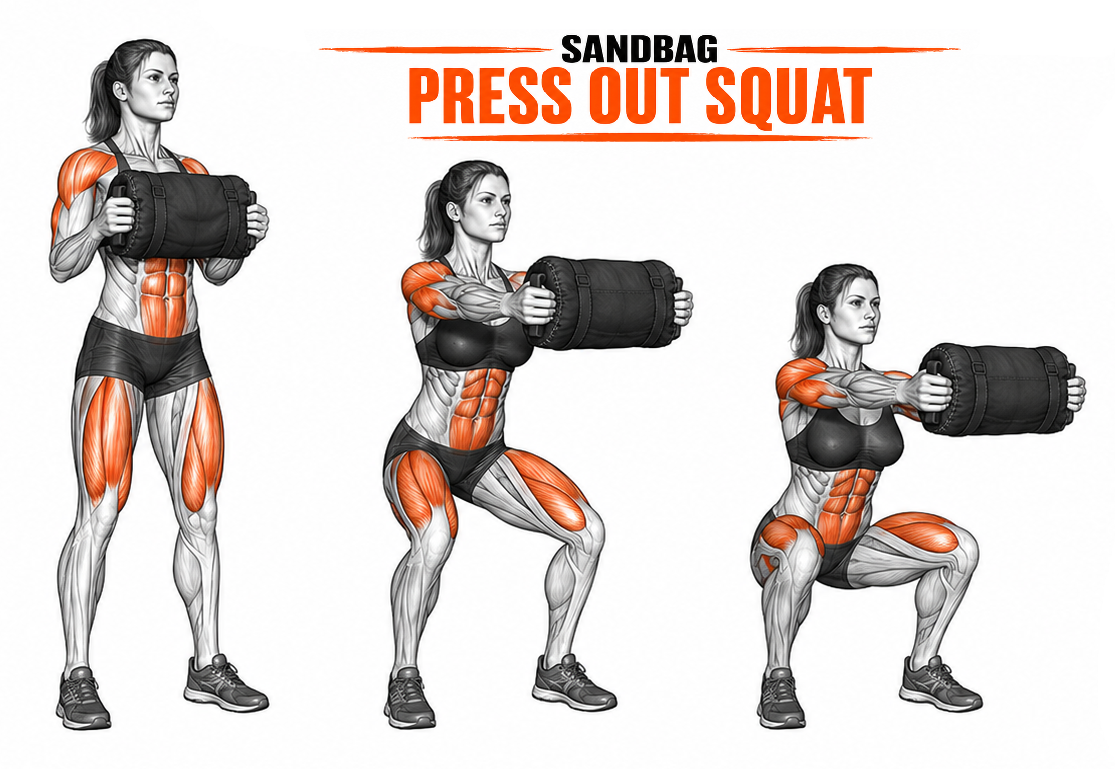
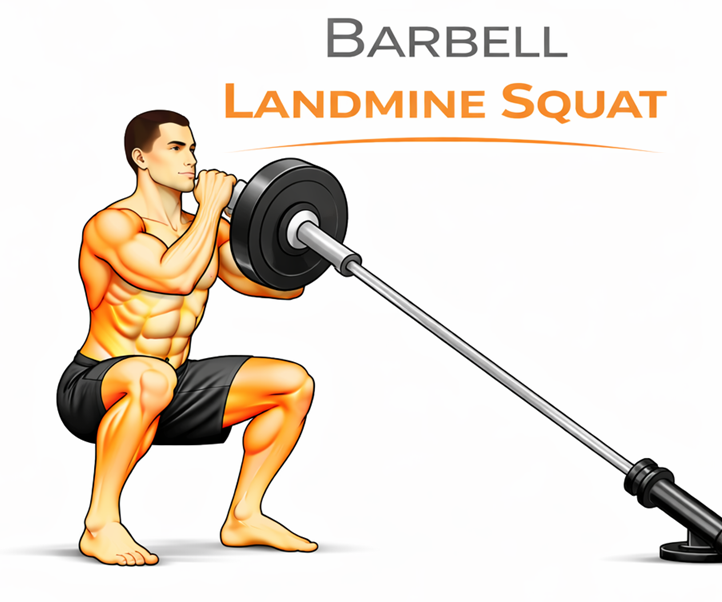
Goblet-style squat holding the end of a landmine bar at chest height — the angled path keeps the torso upright and forgives mobility limits.
Level: Advanced
Primary: Quads
Secondary: Glutes Hamstrings
Movement: Compound
Tags: Squat
Type: Strength (Weight Lifting)
Equipment: Barbell
Sports: Basketball Football Rugby Track and Field Volleyball
Target muscles
The quadriceps drive the bulk of the work because the upright torso forced by the front-loaded position keeps the knees in deep flexion at depth — much like a front squat or goblet squat. The gluteus maximus drives hip extension. Hamstrings co-contract for knee stability. The trunk works hard isometrically — the front-loaded weight pulls the upper body forward, and the abs and erectors fight to keep it tall. Upper back and shoulders work to hold the bar end at chest height.
How to perform
Setup
Anchor a barbell in a landmine. Stand at the free end of the bar facing the pivot. Cup the end of the barbell with both hands at chest height, elbows tucked. Feet shoulder-width apart, toes slightly turned out. Big breath, brace.
Execution
Sit straight down — knees and hips break together. Keep the torso vertical and the elbows tucked tight to the body. Drive the knees out over the second toes through the descent. Hit depth (hip crease below the top of the knee). Drive through the whole foot to stand, finishing with the hips fully extended. The bar end stays at chest height through the full range; if the elbows drift up or out as you tire, the load shifts forward and the squat collapses. Exhale on the way up.
Common mistakes
- Letting the elbows drift forward and up during the descent — pulls the torso forward and turns the lift into a partial good morning.
- Knees collapsing inward at the bottom. Drive them out actively.
- Cutting depth as the load gets heavier. The angled-load squat exposes shallow depth more clearly than a back squat.
- Squatting too far from the landmine, which makes the bar feel heavier than it should and pulls you forward. Stand close enough that the bar arcs cleanly through the rep.
- Using a load you can't keep at chest height. If the bar end drops to your stomach during the set, the working weight is too heavy.
Progressions and regressions
Regress to the goblet squat with a dumbbell or kettlebell — same upright-torso pattern with a smaller stability demand. To progress, work pause reps (3-second hold at the bottom), the offset version (one hand higher on the bar than the other), or move toward front squats and Zercher squats which apply heavier load through similar leverages.
Programming notes
Excellent as a primary squat for lifters with shoulder mobility issues that limit a clean front rack, or as accessory work after a back squat. 3-4 sets of 8-12 reps with moderate loads. The trunk demand limits how heavy this loads compared to a back squat, which is part of its appeal — the lower spinal compression makes it a useful tool for lifters managing back fatigue while still loading the legs hard.