Dumbbell Squat
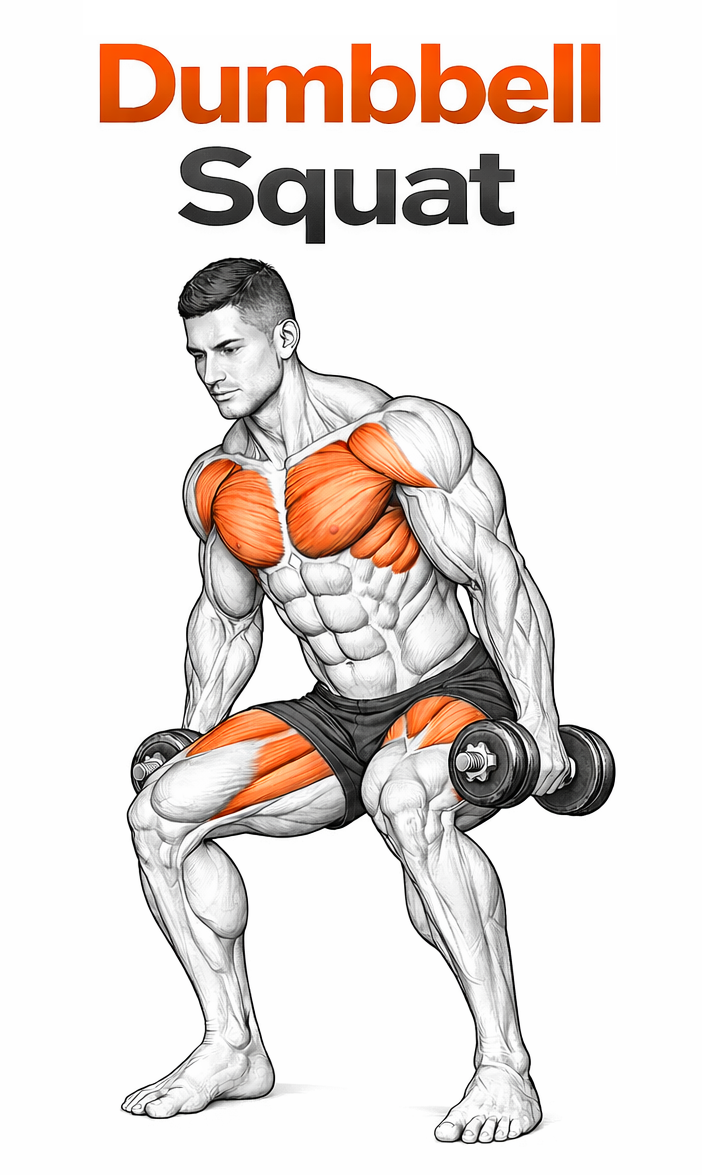
Standard dumbbell squat with weights at the sides — accessible loaded squat, scales linearly with dumbbell weight.
Level: Foundation
Primary: Quads
Secondary: Glutes Hamstrings
Movement: Compound
Tags: Squat
Type: Strength (Weight Lifting)
Equipment: Dumbbell
Sports: Basketball Football Rugby Track and Field Volleyball
Target muscles
The quadriceps drive knee extension. The gluteus maximus drives hip extension. The hamstrings co-contract. The trunk braces against the load. The grip and forearms hold the dumbbells. Versus a barbell squat, the dumbbell version is more accessible (no rack needed) but the working weight is capped by grip strength — most lifters max out the dumbbell squat much earlier than the barbell version.
How to perform
Setup
Stand with feet shoulder-width apart, a dumbbell in each hand at the sides. Toes slightly turned out (15-30 degrees). Trunk braced, chest up.
Execution
Push the hips back slightly and break at the knees and hips together. The knees track over the second toes. Descend to depth (hip crease below the top of the knee). Drive through the full foot to stand, finishing with the hips extended. The dumbbells stay at the sides throughout; they don't swing or rotate.
Common mistakes
- Knees collapsing inward at the bottom. Drive them out actively.
- Heels lifting. Work ankle mobility if you can't keep them down.
- Cutting depth as the load gets heavier.
- Torso pitching forward.
- Dropping the dumbbells at the bottom.
Progressions and regressions
Regress to bodyweight squats until the pattern is clean. Then to goblet squats. To progress, increase dumbbell weight, work pause squats (3-second pause at depth), or move to barbell back squats once the dumbbells become limiting.
Programming notes
Excellent primary lower-body lift for beginners and intermediates. 3-4 sets of 8-12 reps. Two times a week. Pair with deadlift variations for complete lower-body work.