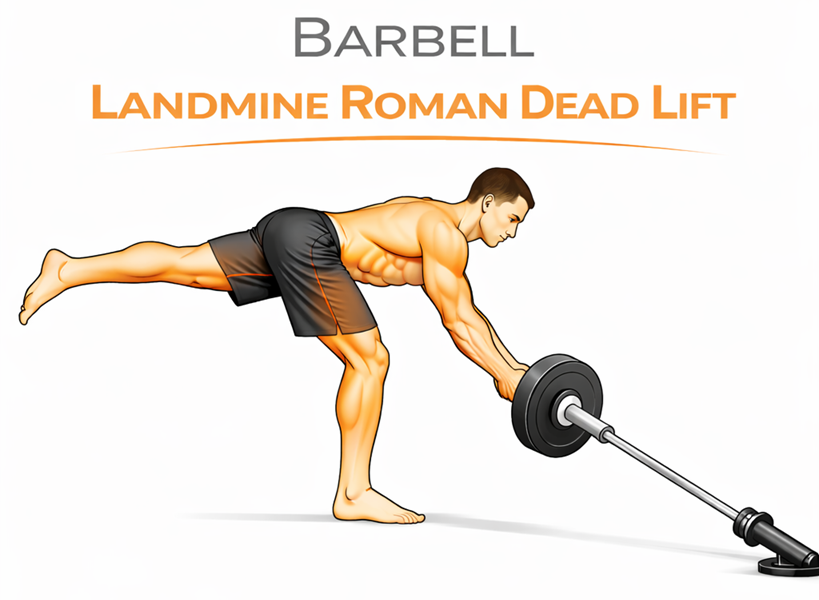
Barbell Landmine Roman Dead Lift
Hinge with a landmine barbell held at chest — the angled load path makes this a forgiving introduction to heavy hamstring work.
Level: Intermediate
Primary: Hamstrings
Secondary: Back - Lower Glutes
Movement: Compound
Tags: Hinge
Type: Strength (Weight Lifting)
Equipment: Barbell
Sports: Football Rugby Track and Field
Target muscles
The hamstrings handle the lengthening under load on the descent and the hip extension on the way back up — they're the prime mover here. The gluteus maximus assists hip extension. The spinal erectors and the trunk braces hold the spine neutral against the load. The latissimus dorsi work isometrically to keep the bar tight to the body. Less posterior chain and more direct hamstring work than a barbell RDL because the landmine angle slightly modifies the lever and the bar path stays closer to the body.
How to perform
Setup
Stand facing the landmine, straddling the free end of the barbell. Hinge to grip the end of the bar with both hands cupped or interlocked. Stand up to bring the bar to chest height. Feet hip-width apart, slight knee bend, shoulders back, lats tight, chest up. Big breath into the belly.
Execution
Push the hips back and let the torso fold forward at the hip joint. Maintain the same slight knee bend throughout. Lower the bar in line with its arc — it'll travel down and slightly toward you. Stop when you feel a strong stretch in the hamstrings; for most lifters that's somewhere between a 30-degree torso angle and parallel. Reverse by driving the hips forward and standing tall. Squeeze the glutes at the top. Don't lean back at lockout.
Common mistakes
- Bending the knees more as the rep gets harder, which converts the lift into a partial squat. Lock in the knee angle and keep it.
- Rounding the lower back at the bottom. Stop when the hamstrings cap the range — going further is just spinal flexion under load.
- Standing too far from the landmine pivot, which makes the bar swing forward away from the body. Stay close.
- Using the upper body to muscle the bar up. The lift is hip-driven; the arms are just a connection.
- Bouncing reps off the bottom. Pause briefly at the stretch, then drive.
Progressions and regressions
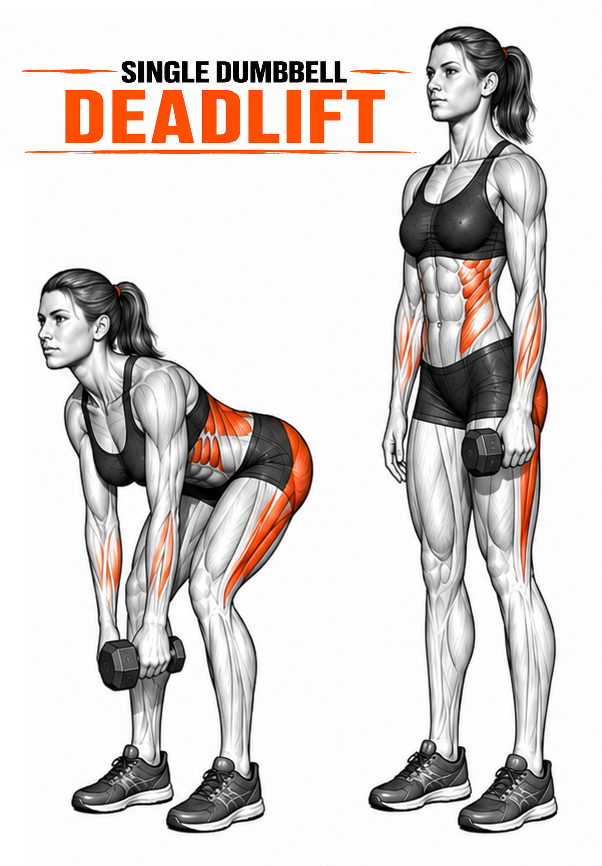
Regress to bodyweight Romanian deadlifts or kettlebell RDLs to groove the hinge before loading. The single-arm dumbbell RDL is a useful stepping stone. To progress, work the staggered-stance landmine RDL (back foot lightly tapped, working leg taking most of the load), pause RDLs (3-second pause at the bottom stretch), or move to barbell RDLs once the pattern is clean.
Programming notes
Excellent posterior-chain accessory after squats or as a primary hinge movement on a non-deadlift day. 3-4 sets of 8-12 reps with moderate loads. Once or twice a week. The shorter lever compared to a barbell RDL makes it easier on the lower back, which is useful for lifters managing lumbar fatigue while still wanting hard hamstring work. Pair with hip thrusts for a strong glute-and-hamstring combination.