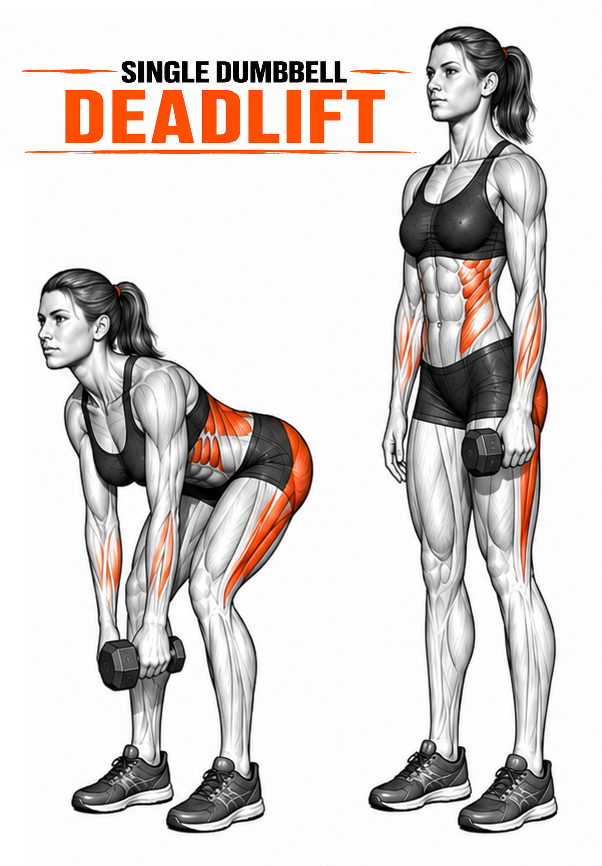
Dumbbell Single Arm Deadlift
A hip-hinge deadlift holding one dumbbell, adding an anti-rotation core demand to the hamstring and glute work.
Level: Foundation
Primary: Hamstrings
Secondary: Abs Back - Lower Glutes
Movement: Compound
Tags: Anti-Rotation Hinge Unilateral
Type: Strength (Weight Lifting)
Equipment: Dumbbell
Target muscles
The hamstrings and glutes drive the hinge, the erectors hold the spine flat, and because the load sits on only one side, the obliques and quadratus lumborum work hard to stop the torso twisting toward the weight. It's a hinge with a built-in anti-rotation challenge that exposes and corrects side-to-side imbalances.
How to perform
Setup
Hold one dumbbell at the side of one thigh, feet hip-width, knees soft, shoulders square and back flat. Brace the core, paying attention to keeping both shoulders level.
Execution
Push the hips back and lower the dumbbell down the side of the leg, resisting the urge to rotate or lean toward the loaded side. Keep both hips and shoulders square to the front. Lower until you feel a hamstring stretch with a flat back, then drive the hips forward to stand tall and squeeze the glutes. Complete the reps on one side, then switch the dumbbell to the other hand.
Common mistakes
- Letting the torso twist or tip toward the loaded side instead of staying square.
- Rounding the back to reach lower.
- Bending the knees too much and losing the hinge.
- Doing uneven reps or load between sides and reinforcing an imbalance.
Progressions and regressions
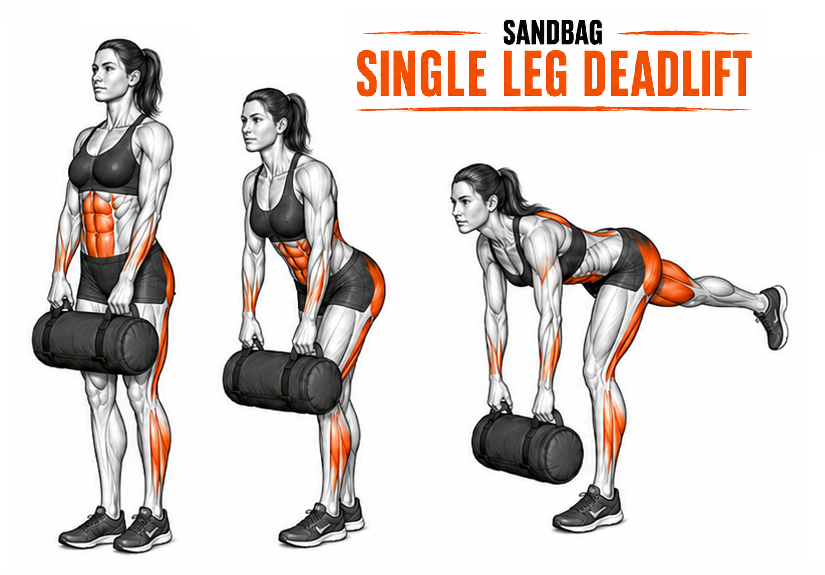
Regress to a two-dumbbell deadlift to remove the anti-rotation demand while you learn the hinge. Progress by adding load, slowing the lowering, or moving to a single-leg single-arm version for a major balance upgrade. Always train both sides evenly.
Programming notes
Program it as a unilateral hinge and core-stability builder, 3 sets of 8-12 per side. It's excellent for ironing out left-right differences and teaching anti-rotation under a hinge. Slot it in as accessory work after bilateral pulls or as a primary hinge for beginners.