Advanced Tuck Back Lever
Face-down and horizontal with the hips opened past a tight tuck, the upper back and chest fight to keep the lengthening body level under the bar.
Want a bodyweight back workout?
Our wizard builds one around your time, goal, and equipment in about two minutes. Free — no signup needed.
Make Me a Workout → Just did it? Track your sets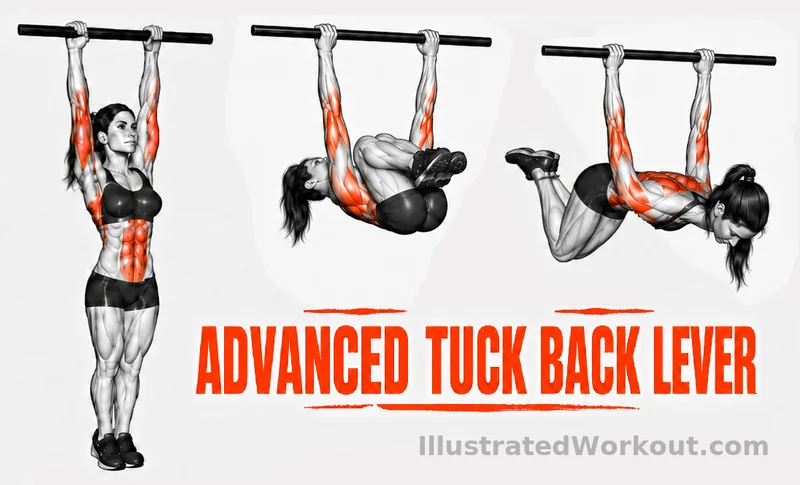
Face-down and horizontal with the hips opened past a tight tuck, the upper back and chest fight to keep the lengthening body level under the bar.
Level: Advanced
Primary: Back - Upper Chest
Secondary: Abs Biceps Forearms Shoulder
Movement: Compound
Tags: Core Stability
Type: ISO
Equipment: Body Weight
Target muscles
As the knees drift away from the chest into the advanced tuck, the lever runs well past the basic version, demanding markedly more work from the lats and teres major to hold the body horizontal and face-down. The chest, front deltoids and biceps take a growing stretch load through the straight arms behind the torso, while the abdominals and glutes brace to keep the hips level and stop the back arching. The gripping forearms stay under constant tension.
How to perform
Setup
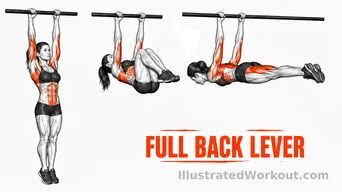
Pull into an inverted hang with straight arms and tuck the knees toward the chest. Set the shoulders down, retract the blades, and open the hips a little so the thighs sit at roughly ninety degrees to the torso. Brace the abs and point the toes.
Execution
Lower the tucked body backward until the torso is horizontal, then push the hips open so the knees drift away from the chest and the thighs move toward parallel with the trunk. Hold that longer lever with locked arms, driving the shoulders down and away. Keep the back flat and the abs braced so the hips do not sag or the spine over-arch. The wider you open the tuck, the harder the hold, so control the angle deliberately. Breathe shallowly and finish the set when the line breaks.
Common mistakes
- Pulling the knees back toward the chest as fatigue builds, quietly shortening the lever and reducing the intended load.
- Letting the hips drop below horizontal so the position sags rather than holding a level torso.
- Arching the lower back to escape the abdominal demand, which shifts strain onto the shoulders.
- Bending the arms, removing the straight-arm structure the lever is built on.
Progressions and regressions
Regress to the tuck back lever with the knees held tight to the chest for the shortest, most manageable lever. Progress by opening further toward the straddle back lever, then the full straight-body hold. Straight-arm pulldowns and German hangs build the shoulder and biceps strength that lets you open the tuck without the elbows folding.
Programming notes
Program it as an advanced skill hold, several sets of eight to fifteen second holds, chasing accumulated time rather than a single maximal effort. Train it early while the tendons are fresh, two or three times a week. It is a key bridge between the tuck and the straddle, so live here until the hips open comfortably. Ease off if the elbow or anterior shoulder complains, as the opening tuck steadily increases the stretch on those tissues.