Weighted Jump Rope
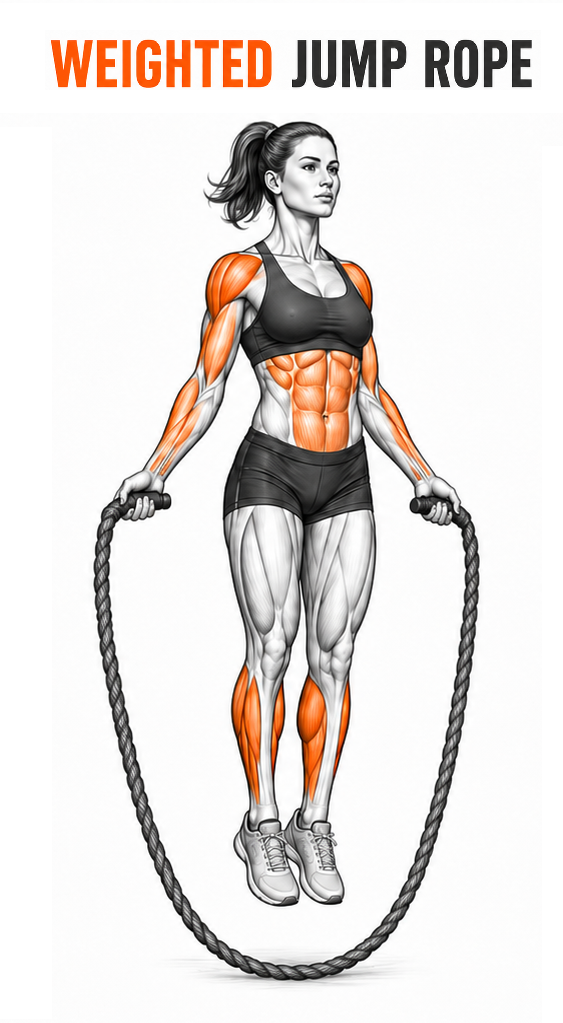
Rope skipping with a heavier rope or loaded handles, adding real forearm and shoulder demand on top of the calf and cardiovascular work.
Level: Foundation
Primary: Cardio
Secondary: Calves Forearms Shoulder
Movement: Isolation
Type: Aerobic (Cardio) Anaerobic Intervals (HIIT / Bootcamp / Circuit)
Equipment: Jump Rope
Target muscles
The heavier rope keeps the calves working as the main spring while loading the forearms, shoulders and upper back far more than a standard rope, because the wrists and shoulders must drive a weighted cable around. The grip muscles of the forearm work continuously, the rear deltoids and traps help control the arc, and the core braces to keep posture tall. It blends conditioning with genuine upper-body endurance.
How to perform
Setup
Choose a weighted rope or loaded handles you can still turn smoothly. Hold the handles at hip height with elbows close to the body, stand tall with feet together, and take the weight onto the balls of the feet.
Execution
Drive the rope with the forearms and wrists — the extra mass means the shoulders and upper back now contribute meaningfully to each turn. Hop just high enough to clear the rope and land softly on the balls of the feet. Keep the jumps small and the cadence steady; the heavier rope naturally slows the turnover, so settle into a rhythm rather than fighting it. Maintain a tall chest and a braced trunk so the loaded arms don't drag your posture forward. Expect the forearms and shoulders to fatigue before the legs do.
Common mistakes
- Grabbing a rope so heavy the turn becomes ragged and the rhythm falls apart.
- Swinging from the shoulders alone and letting the wrists go slack, which burns out the arms fast.
- Hunching forward under the load instead of holding a tall, braced posture.
- Jumping too high to compensate for the slower rope, which wastes energy and hammers the joints.
Progressions and regressions
Regress to a standard unweighted rope to lock in clean rhythm, or use a lighter weighted rope before a heavier one. Progress by increasing rope or handle weight, extending the work intervals, or moving to high-knee skips with the loaded rope. Keep the added resistance modest — control and continuous turnover matter more than maximum weight here.
Programming notes
Program it as conditioning with an upper-body bias, thirty to sixty second rounds with matched rest, for six to twelve sets. It fits well in a circuit when you want the arms and grip taxed alongside the legs. Because the forearms fatigue quickly, keep early sessions short and avoid scheduling it right before grip-dependent pulling work.