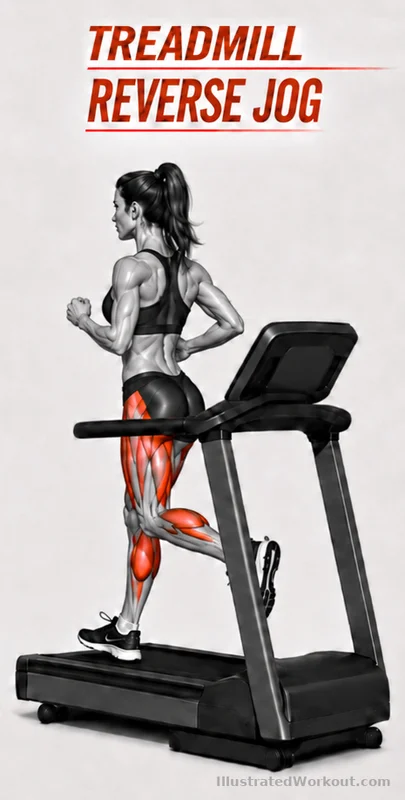
Treadmill Reverse Jogging
Jogging backward on a slow belt, emphasising the quads and forcing sharper balance and coordination than forward running demands.
Want a treadmill conditioning workout?
Our wizard builds one around your time, goal, and equipment in about two minutes. Free — no signup needed.
Make Me a Workout → Just did it? Track your setsJogging backward on a slow belt, emphasising the quads and forcing sharper balance and coordination than forward running demands.
Level: Foundation
Primary: Cardio
Secondary: Quads
Movement: Isolation
Type: Aerobic (Cardio)
Equipment: Treadmill
Target muscles
Running in reverse shifts the emphasis onto the quadriceps, which work harder to control and drive each backward step, while the calves push off the forefoot and the glutes assist the extension. The hip flexors pull the legs back under the body, and the core and small stabilisers work overtime because moving blind demands constant balance adjustments. The heart rate climbs at a lower speed than forward jogging.
How to perform
Setup
Set a slow, cautious belt speed and hold both rails firmly before turning to face the console with your back to the belt's direction of travel. Rise onto the balls of the feet, soften the knees, and keep the torso tall. Glance down briefly to learn the deck, then keep the gaze up and rely on feel.
Execution
Jog backward with short, controlled steps, reaching each foot back and rolling from the ball of the foot toward the heel as the belt carries it under you. Keep the strides compact and the cadence steady, staying high on the forefoot for quick, safe contacts. Hold the rails lightly until the movement feels secure, then progress to a lighter touch. Keep the torso upright and the hips beneath you, and resist the urge to lean back. Stop immediately if you lose the rhythm.
Common mistakes
- Setting the speed too high for a movement performed essentially blind, which is the main safety risk.
- Reaching the foot too far back and landing heel-first instead of rolling from the forefoot.
- Leaning the torso back rather than staying tall and stacked over the hips.
- Letting go of the rails before the backward rhythm and balance are reliable.
Progressions and regressions
Regress to a slow reverse walk holding both rails until the pattern feels natural. Progress by lifting the speed slightly, lightening the rail hold, or adding a gentle incline to increase the quad demand. Alternating short segments of forward and reverse jogging builds coordination and evens out the leg musculature.
Programming notes
Use it as a coordination and quad-focused conditioning drill, short bouts of thirty to sixty seconds for a few rounds, often paired with forward running. It challenges balance and lightly loads the quads while raising the heart rate at modest speed. Keep the belt slow and the rails within reach, and skip it entirely if balance or vision is compromised, since running blind carries real fall risk.