Suspension Wheelbarrow
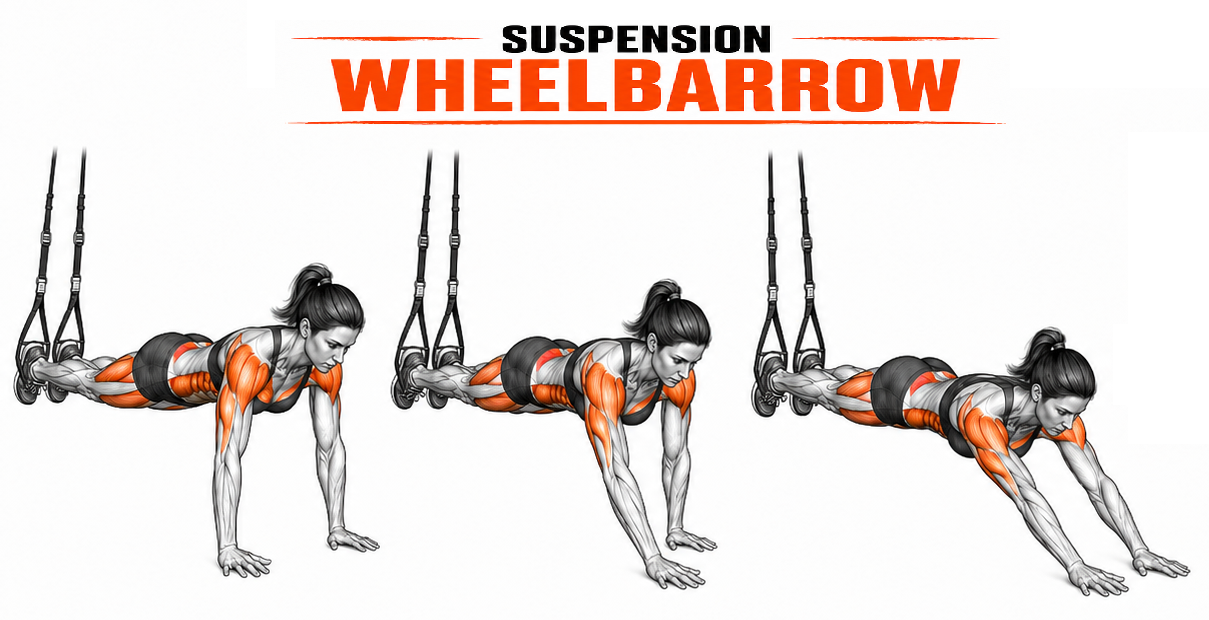
The anterior core fights extension in a long plank with the feet suspended in straps and the hands on the floor.
Level: Advanced
Primary: Abs
Secondary: Chest Shoulder Triceps
Movement: Compound
Tags: Anti-Rotation Core Stability
Type: Functional Fitness (Obstacle & Hybrid) ISO
Equipment: Suspension
Target muscles
With the feet hanging in the suspension straps and the hands on the floor, the entire anterior core — rectus abdominis, transverse abdominis and obliques — works overtime to stop the hips sagging and the lower back collapsing into extension. The shoulders, chest and triceps hold the long plank and press against the floor, the serratus anterior keeps the shoulder blades stable, and the obliques resist the straps' tendency to let the hips drift and twist. The unstable foot anchor turns a plank into a fierce anti-extension and anti-rotation hold.
How to perform
Setup
Set the straps to about mid-shin height and kneel facing away, placing one foot at a time into the cradles. Walk the hands forward into a high plank with the wrists under the shoulders and the legs extended behind, the body forming one straight line from heels to head. Brace the core and square the hips before you settle.
Execution
Hold the long plank rigid, driving the floor away through the hands, tucking the pelvis slightly so the lower back stays neutral and squeezing the glutes to keep the hips from dropping. The straps will try to swing the feet and tip the hips — resist by bracing hard and keeping equal pressure through both hands. Breathe in shallow, controlled breaths into the brace and hold the line for time. To progress the movement, add slow push-ups or pike the hips up toward a jackknife, but keep the spine braced and the hips level on every rep.
Common mistakes
- Letting the hips sag toward the floor, which dumps the load onto the lower back instead of the abs.
- Piking the hips up to offload the core when a straight-line hold is the goal.
- Allowing the suspended feet to swing and the hips to twist instead of bracing against it.
- Holding the breath entirely, which spikes tension and cuts the hold short.
Progressions and regressions
Regress to a feet-elevated plank on a stable box, or a standard forearm plank, until you can hold a clean line. Progress from a static hold to suspension push-ups, then to slow pike-ups (jackknives), and eventually to adding a knee-tuck or a single-leg variation. Lowering the straps closer to the floor reduces the difficulty; keep the hips level as the standard for moving on.
Programming notes
Program it as advanced anti-extension core work, 3 sets of 20-40 second holds or 6-10 controlled push-ups or pike-ups, as a finisher or in a circuit. Quality beats duration on the unstable anchor — end the set the moment the hips break the line rather than grinding a shaking hold. It pairs well with a posterior-chain movement to balance the heavy anterior-core demand, and it is taxing on the shoulders, so place it after, not before, heavy pressing.