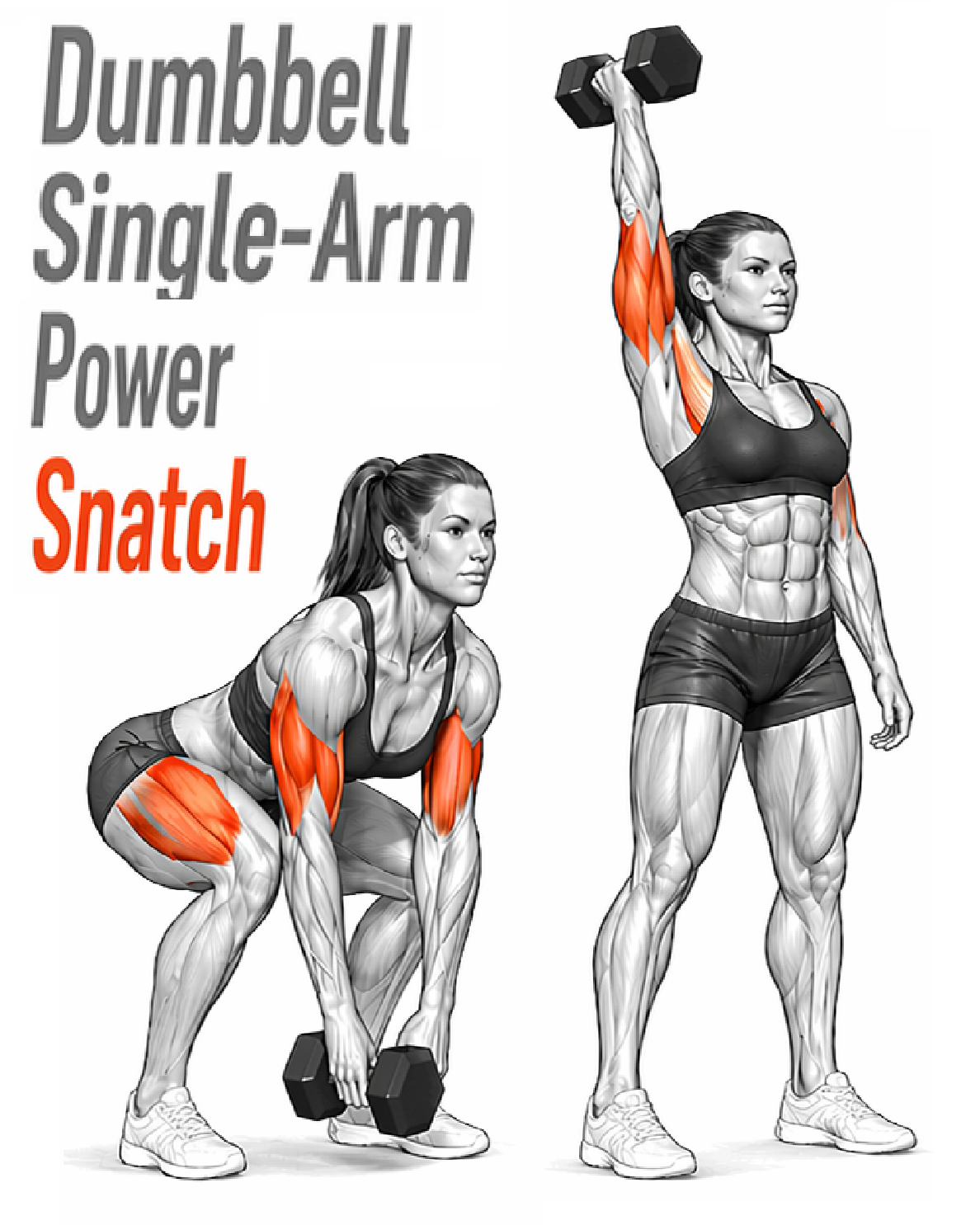
Dumbbell Single Arm Power Snatch
Single-arm dumbbell power snatch from the floor — explosive pull all the way to overhead in one motion, the unilateral apex of dumbbell Olympic-style work.
Level: Advanced
Primary: Full Body
Secondary: Back - Lower Quads Shoulder
Movement: Compound
Tags: Explosive Olympic Lift Unilateral
Type: Anaerobic Intervals (HIIT / Bootcamp / Circuit) Hybrid Athletic Strength (Weight Lifting)
Equipment: Dumbbell
Sports: Football Track and Field
Target muscles
The posterior chain generates the explosive pull from the floor. The deltoid and triceps stabilize the dumbbell at the overhead lockout. The trunk braces violently against the unilateral load. The obliques and quadratus lumborum fire hard to resist rotation. The grip and forearm hold the dumbbell through the rapid acceleration.
How to perform
Setup
Stand with one dumbbell on the floor between the feet, other arm hanging or extending for balance. Hinge to grip. Shins close to vertical, hips above knees, chest up.
Execution
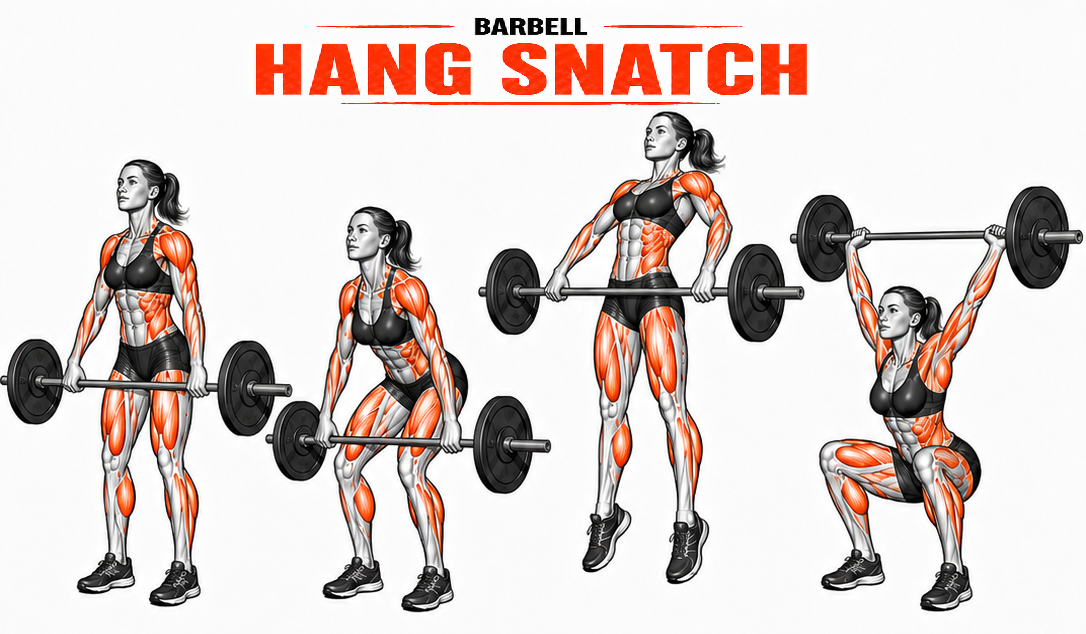
Patient first pull off the floor. At the knees, drive the hips through explosively. As the dumbbell launches up, continue pulling overhead — the arm whips wide and locks out overhead in a quarter-squat. The legs land in partial squat as the arm finishes. Stand tall. Lower the dumbbell back to the floor under control. Switch sides each set.
Common mistakes
- Pressing out at the top. Fast lockout catch.
- Torso rotating. Trunk square.
- Bar drifting forward. Close to the body.
- Catching with bent elbow. Full lockout.
- Soft trunk at the catch.
Progressions and regressions
Regress to the single-arm hang power snatch (no floor pull). Then add the floor pull. To progress, work the full single-arm snatch (deeper catch).
Programming notes
Train fresh, never under fatigue. 4 sets of 2-3 reps per side with full recovery, two times a week. As HIIT, EMOM format (1 rep per side at the top of every minute for 10 minutes) at moderate loads.