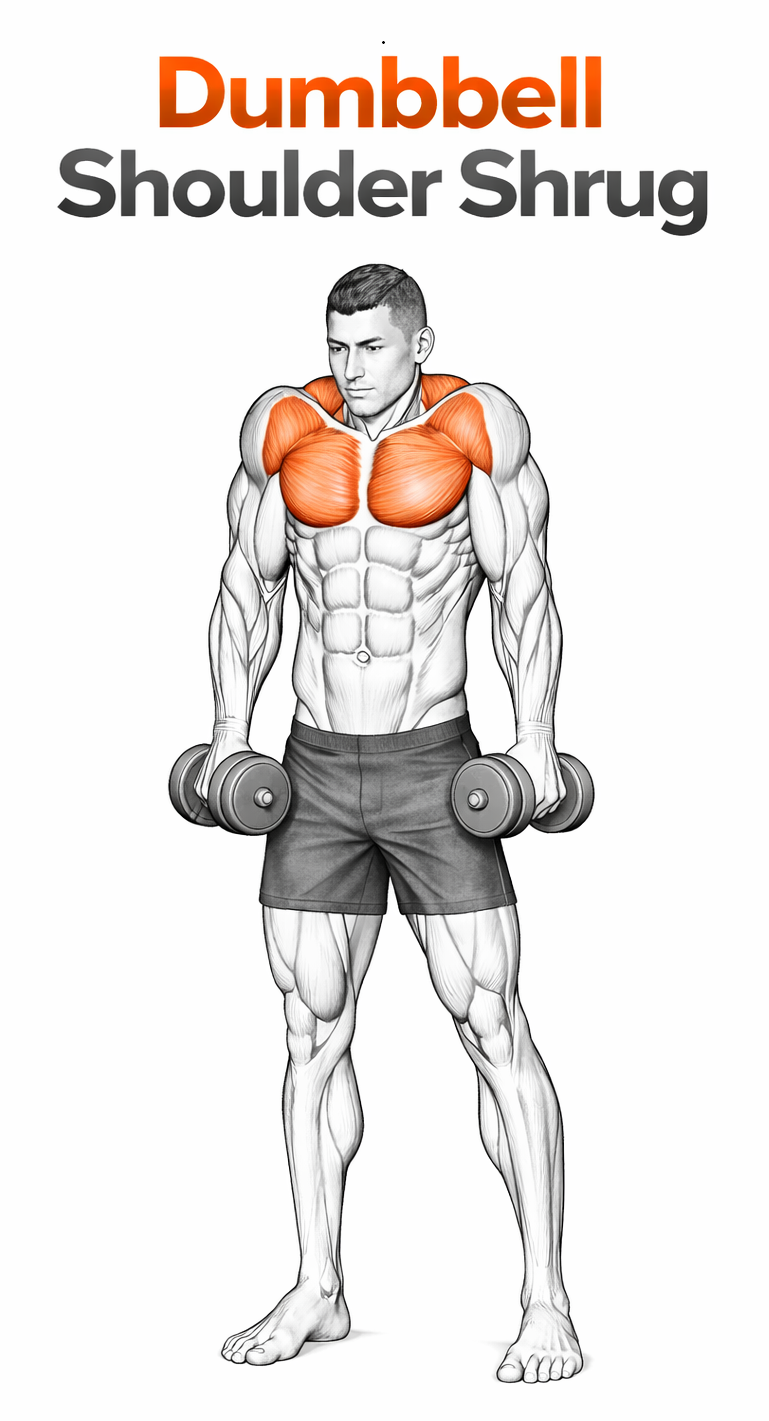
Dumbbell Shoulder Shrug
Standing dumbbell shrug — pure scapular elevation work, builds the upper traps with no leg or back assistance.
Level: Beginner
Primary: Traps
Movement: Isolation
Tags: Pull
Type: Strength (Weight Lifting)
Equipment: Dumbbell
Sports: Basketball Football
Target muscles
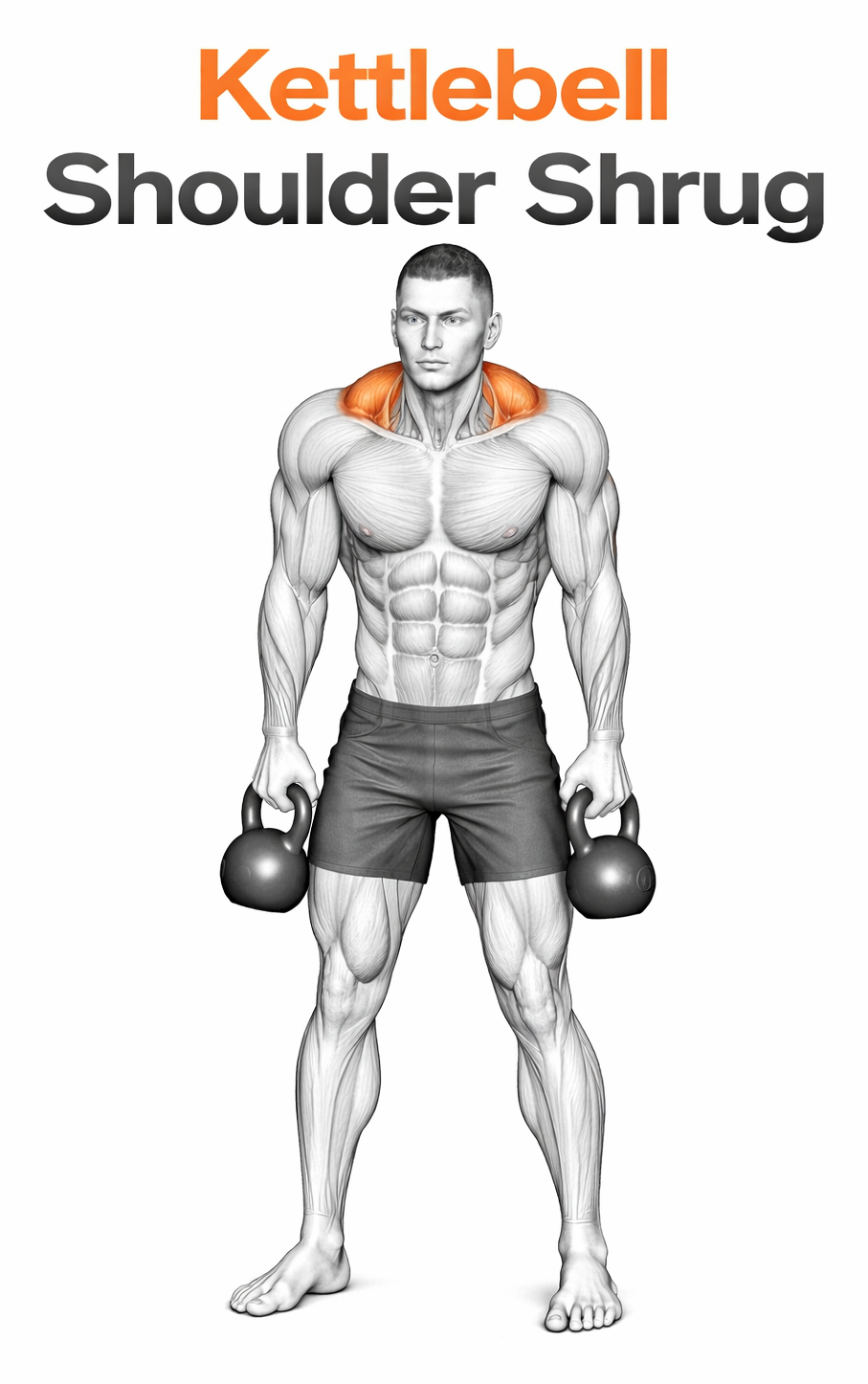
The upper trapezius drives scapular elevation. The levator scapulae assist. The forearms and grip work continuously. The dumbbell version (versus barbell) lets the arms hang naturally at the sides, which is friendlier to most lifters' shoulders. Independent path of each dumbbell also exposes side-to-side trap imbalances that a barbell can hide.
How to perform
Setup
Stand with feet hip-width apart, a dumbbell in each hand at the sides, palms facing the body. Slight bend in the elbows. Shoulders down to start. Trunk braced.
Execution
Shrug the shoulders straight up toward the ears. Pure vertical elevation — no rolling forward or backward. Squeeze the traps hard at the top for a one-second peak contraction. Lower the dumbbells under control to the starting position, letting the shoulders depress fully. The arms stay straight; the elbow bend stays consistent. Don't bend the elbows to assist.
Common mistakes
- Rolling the shoulders forward or backward. Pure vertical.
- Bending the elbows. Arms stay nearly straight.
- Cutting the bottom range. Let the shoulders drop fully.
- Loading so heavy the range collapses. Pick a weight allowing a full top squeeze.
- Forgetting the peak pause. The squeeze at the top is most of the value.
Progressions and regressions
Regress to lighter loads until the pattern is solid. To progress, work pause shrugs (3-second hold at the top), heavier dumbbells, or use straps to take grip out of the equation on heaviest top sets.
Programming notes
Accessory work after the main pulls. 3-4 sets of 10-15 reps, two times a week. Pair with face pulls and rear-delt flyes for a complete upper-back program.