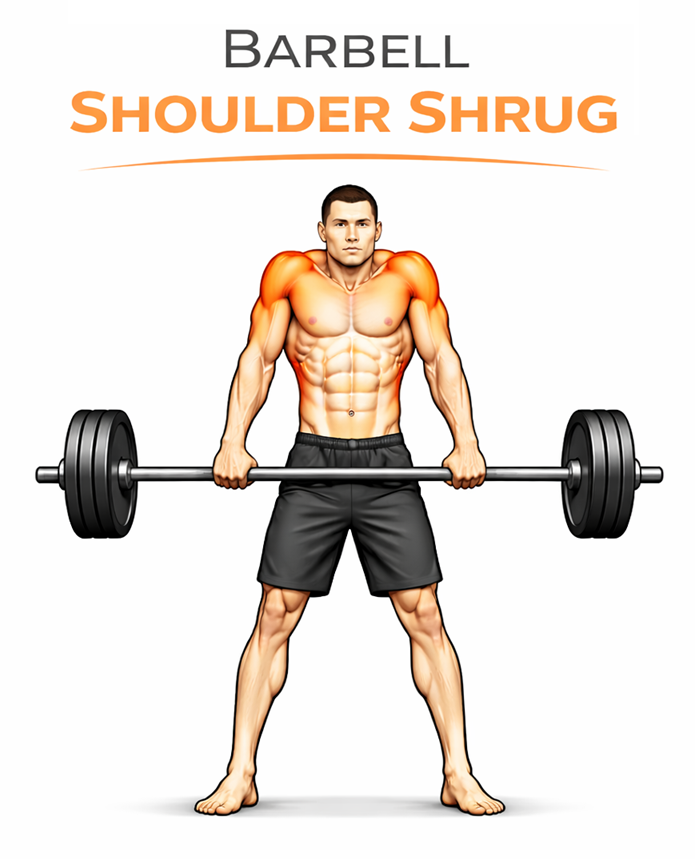
Barbell Shoulder Shrug
Standing barbell shrug — straight-up scapular elevation that builds the upper traps without recruiting the legs or back.
Level: Foundation
Primary: Traps
Movement: Isolation
Tags: Pull
Type: Strength (Weight Lifting)
Equipment: Barbell
Sports: Football Rugby Track and Field
Target muscles
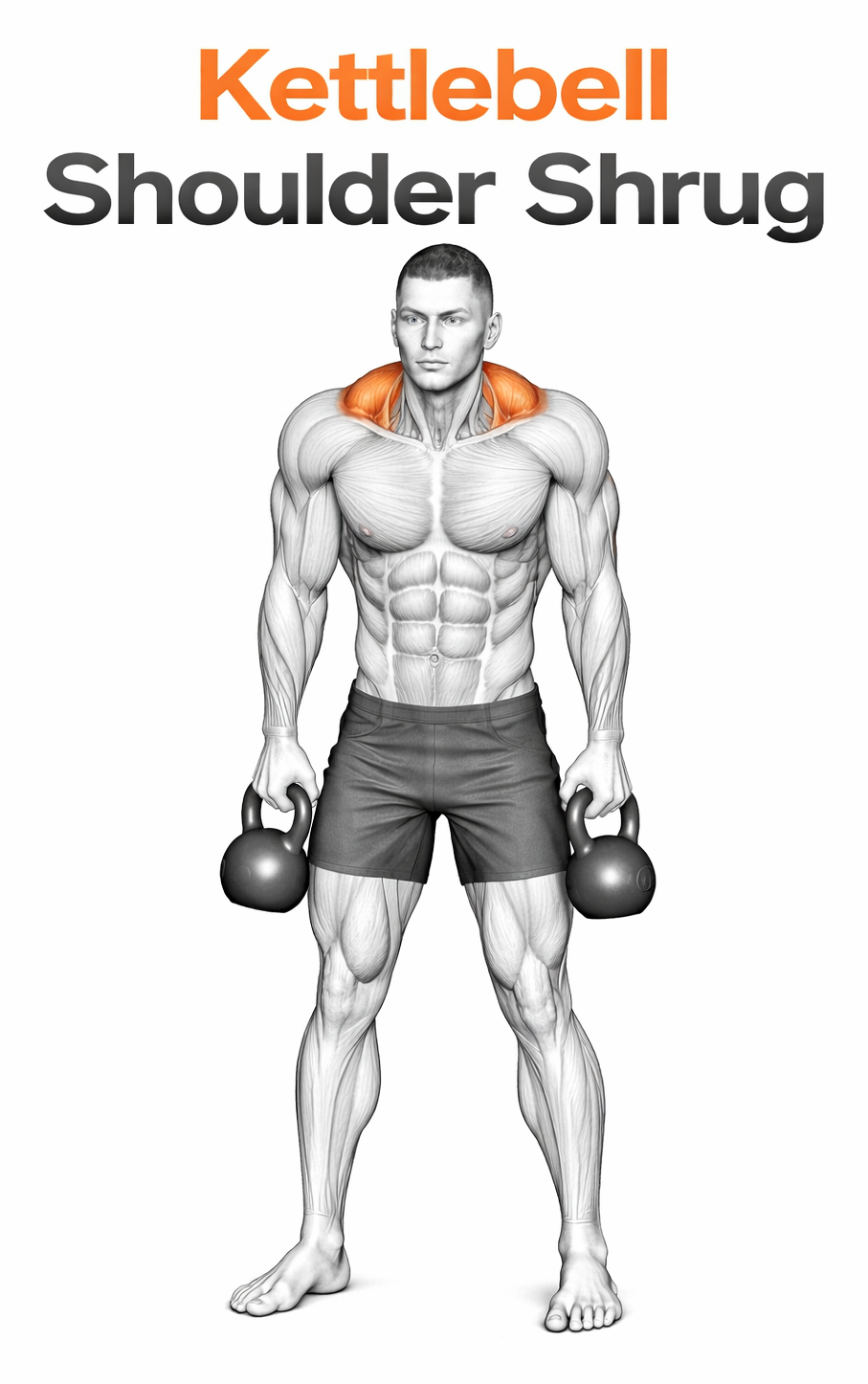
The upper trapezius is the prime mover, working through scapular elevation. The levator scapulae assist with the elevation. The forearms and grip work continuously to hold the loaded bar — heavy shrugs are often grip-limited before they're trap-limited, which is why many lifters use straps for top sets. Surprisingly little spinal-erector or lower-back work; this is a near-pure trap exercise.
How to perform
Setup
Stand with feet hip-width apart, barbell held at arm's length with an overhand grip slightly wider than shoulder-width. Shoulders down and back, chest up, mild brace in the trunk. The bar should hang at thigh level. Take a breath in.
Execution
Shrug the shoulders straight up toward the ears — vertical elevation, not a roll forward or back. The traps contract maximally at the top. Pause for a hard one-second squeeze. Lower under control through a full range, letting the bar pull the shoulders all the way down. Don't bend the elbows during the shrug; the lift is shoulder-driven, not arm-driven. Exhale at the top of each rep.
Common mistakes
- Rolling the shoulders forward or backward as part of the shrug. Pure vertical elevation only — rolling adds nothing and can irritate the shoulders.
- Bending the elbows to assist, which converts the lift into a partial upright row. Keep the arms straight.
- Cutting the bottom of the range. Let the shoulders depress fully between reps for maximum trap stretch.
- Loading so heavy that the range collapses to a couple of inches. Use a load you can shrug through a full top position with a clear pause.
- Forgetting straps on heavy top sets. The point of the lift is trap stimulus, not grip work — strap up when the grip is the limiting factor.
Progressions and regressions
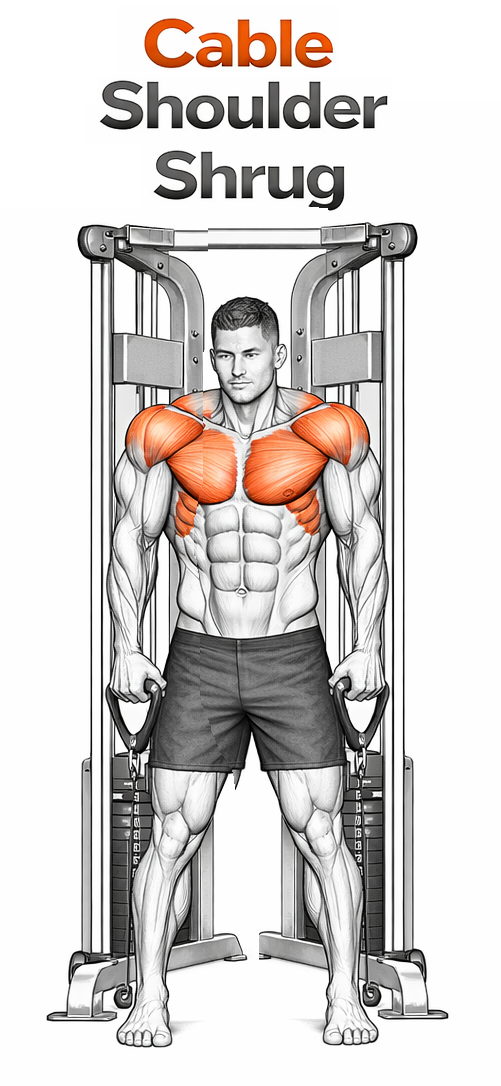
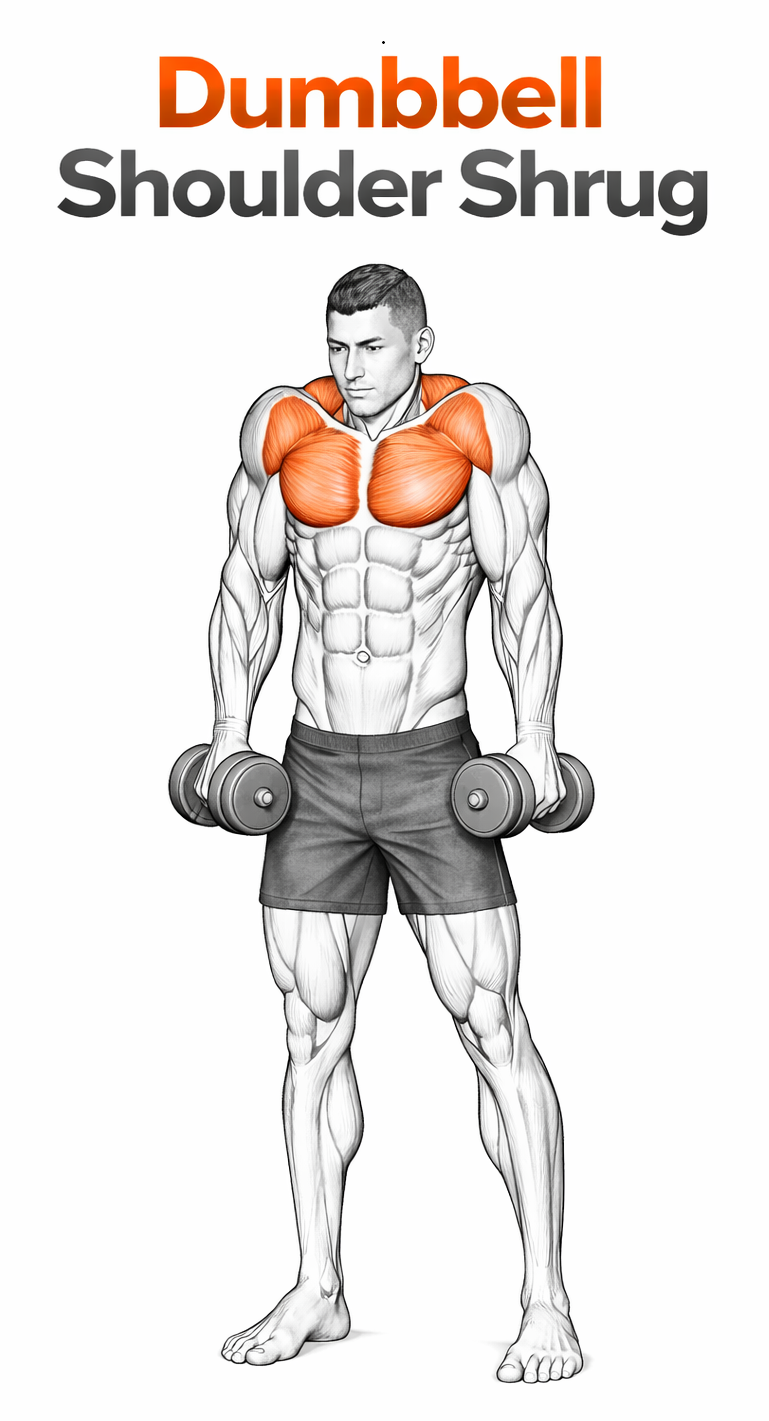
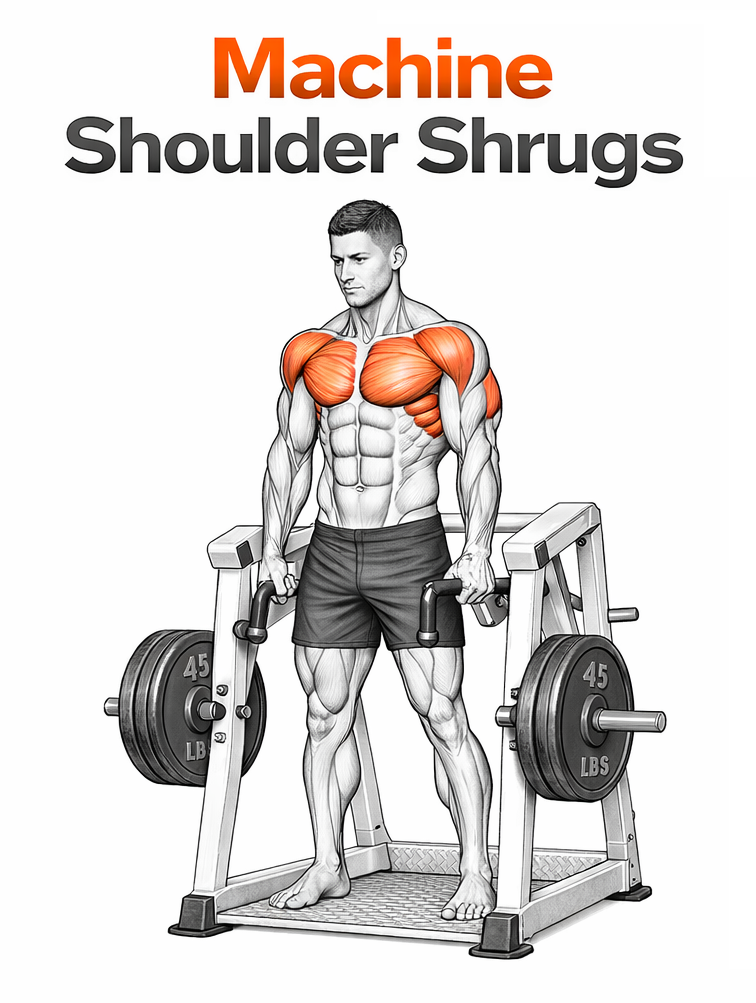
Regress to dumbbell shrugs (one in each hand) for a more natural arm position that's friendlier to the shoulders. Cable shrugs or shrug machines offer constant tension. To progress, work pause shrugs (3-second hold at the top), behind-the-back shrugs (bar held behind the body, hitting the lower-trap fibers differently), or rack pull shrugs (heavy partial deadlift to a shrug at the top — moves enormous weight).
Programming notes
Accessory work, not main lifts. 3-4 sets of 8-15 reps after the main pulling work or as part of a back-and-traps session. Once or twice a week. Pair with face pulls and rear-delt flyes for a balanced upper-back development. The traps respond well to high volume and moderate-to-heavy loads — many lifters' fastest visible upper-body gains come from doubling their trap work.