Disc Slider Hamstring Curls
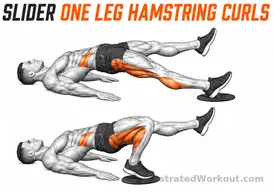
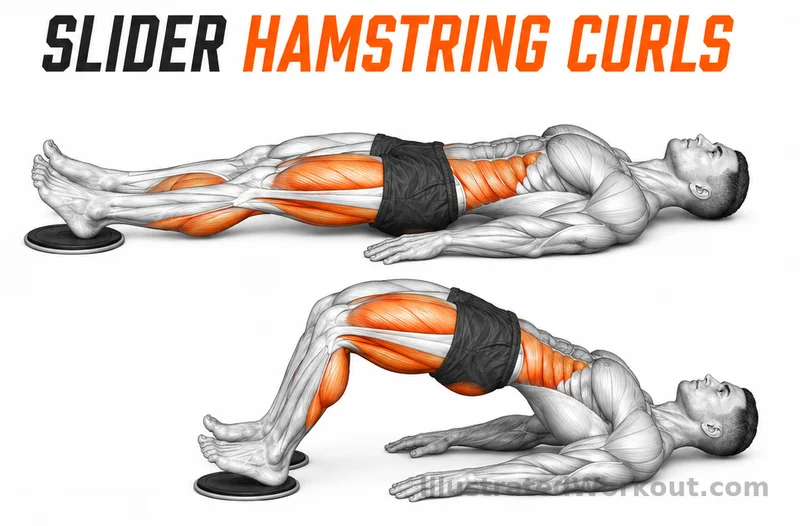
Lying on your back with heels on the sliders, the feet pull in toward a raised bridge, curling the hamstrings against the sliding load.
Want a disc sliders leg workout?
Our wizard builds one around your time, goal, and equipment in about two minutes. Free — no signup needed.
Make Me a Workout → Just did it? Track your setsLying on your back with heels on the sliders, the feet pull in toward a raised bridge, curling the hamstrings against the sliding load.
Level: Foundation
Primary: Hamstrings
Secondary: Abs Glutes
Movement: Isolation
Tags: Hinge
Type: Functional Fitness (Obstacle & Hybrid) Strength (Weight Lifting)
Equipment: Disc Sliders
Target muscles
The hamstrings do double duty in this move, both extending the hips to hold the bridge and flexing the knees to drag the heels in, which is exactly how they work on the field. The glutes stay contracted throughout to keep the hips lifted, and the calves assist the knee flexion. The abs and lower back brace to hold the bridge line steady so the pelvis does not drop as the feet travel in and out.
How to perform
Setup
Lie on your back with a slider under each heel, knees bent and arms flat at your sides for balance. Drive through the heels and lift the hips into a bridge so the body forms a straight line from shoulders to knees. Squeeze the glutes and brace the abs to lock that bridge before you move the feet.
Execution
Keeping the hips high, slowly glide both heels away from you until the legs are nearly straight, resisting the slide so the hamstrings lengthen under control. Then curl the heels back in toward the glutes, driving the knees to flex while the hips stay lifted the whole time. Move slowly, especially on the way out, and never let the hips sag toward the floor. Breathe steadily and keep the bridge height constant so the hamstrings, not the lower back, do the work.
Common mistakes
- Letting the hips drop as the legs extend instead of holding the bridge high throughout.
- Rushing the slide out so momentum, rather than the hamstrings, controls the range.
- Pushing through the toes instead of keeping the drive in the heels on the curl back.
- Curling only a short way in rather than dragging the heels close to the glutes for a full contraction.
Progressions and regressions
Regress by curling both legs with a smaller range, or by lowering the hips slightly between reps to share the load. A double-leg version keeps it manageable while strength builds. Progress by slowing the eccentric slide right down, pausing at full extension, or advancing to a single-leg slider curl once you can hold the bridge rock-solid on one heel.
Programming notes
Use it as posterior-chain accessory work, three sets of eight to twelve controlled reps, on lower-body or hamstring-focused days. It is a valuable injury-resilience move because it trains the hamstrings through both of their jobs at once, so it pairs well with hip hinges and deadlifts. Keep the tempo slow and stop when the hips can no longer stay lifted, since a sagging bridge shifts the strain onto the lower back.