Crustacean Crawl
Sideways crab walk with hand and foot stepping in the same direction — coordination and total-body stability through lateral movement.
Level: Beginner
Primary: Cardio Full Body
Movement: Compound
Tags: Animal Movement
Type: Functional Fitness (Obstacle & Hybrid) Primal Movments (Animal Flow-QMT Specifics)
Equipment: Body Weight
Sports: Gymnastics MMA Wrestling
Target muscles
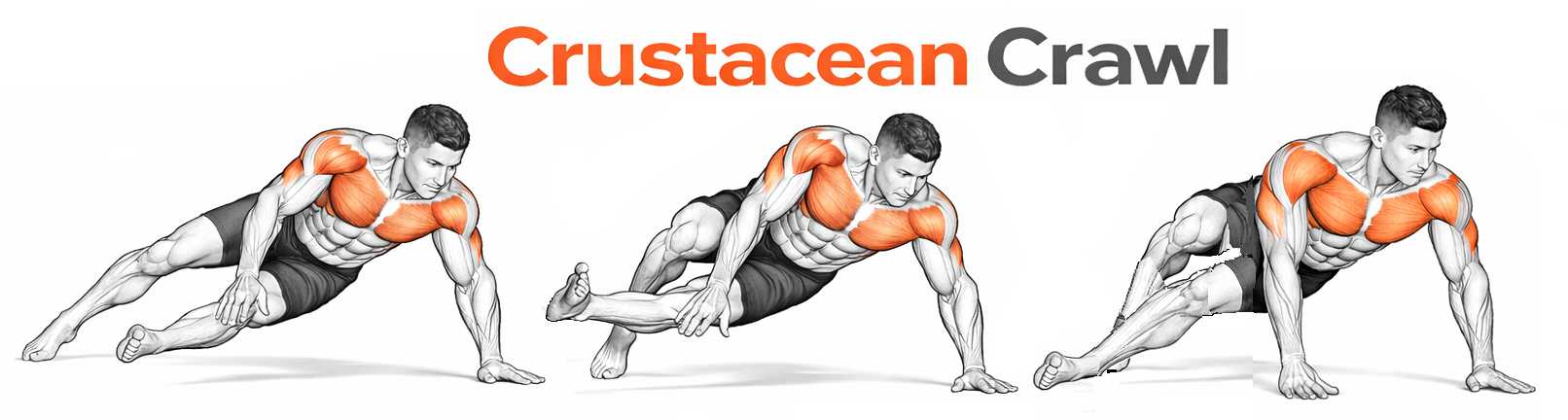
The triceps and posterior deltoids hold the shoulders stable through the lateral support. The glute maximus and hamstrings hold hip extension to keep the hips elevated. The obliques fire continuously to control the lateral weight shift. The wrists flex against the body's load — the wrist demand is greater than in a forward crab walk because the lateral movement loads them at slightly different angles. The hip abductors and adductors of both legs work alternately as the lower body shifts side to side.
How to perform
Setup
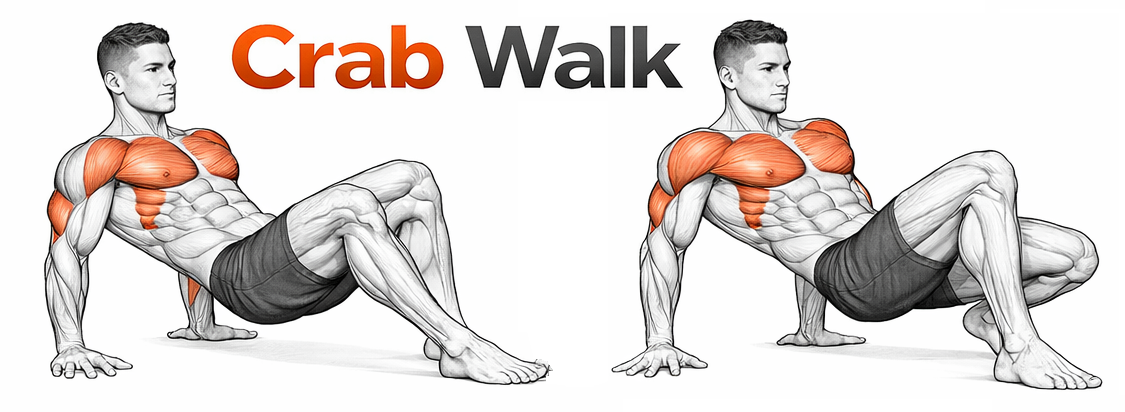
Get into a crab position — sitting bones off the floor, hands behind, feet flat, hips elevated to a tabletop position. Pack the shoulders, brace the trunk. Take a breath.
Execution
Move laterally by stepping the hand and foot on the same side outward — right hand and right foot step right, then left hand and left foot follow to meet them. Then continue in the same direction or reverse. The hips stay elevated throughout. The pace is moderate — fast enough to feel like a flow but slow enough that you don't drop the hips. Continue for the prescribed distance.
Common mistakes
- Hips dropping to the floor. The crustacean crawl is a tabletop in motion — hips touch down and the set is over.
- Wrong-side limbs moving together. The same-side hand and foot move; that's the lateral pattern.
- Moving too fast. Speed loses the trunk control.
- Hunched shoulders. The chest stays open through the walk.
- Doing it daily without rotating with other locomotor patterns. The wrist load adds up.
Progressions and regressions
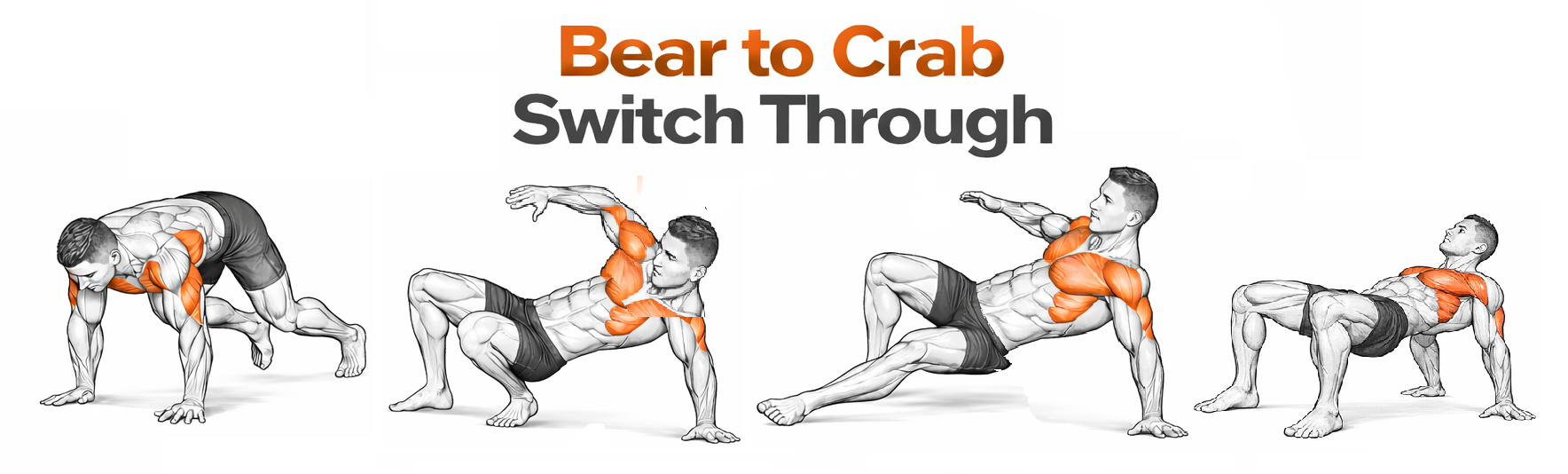
Regress to the static crab walk hold (no movement) until the position is solid. Then the forward crab walk. Then the lateral crustacean version. To progress, lengthen the distance, add a slight kick-through (one leg sweeps through the body), or chain with bear-to-crab transitions.
Programming notes
Excellent for athletes whose sports demand lateral movement (basketball, soccer, hockey). Two or three rounds of 30-60 seconds of continuous lateral walking, two or three times a week. The wrist and shoulder load is meaningful; rotate with bear crawls and other locomotor patterns to give the wrists rest days.