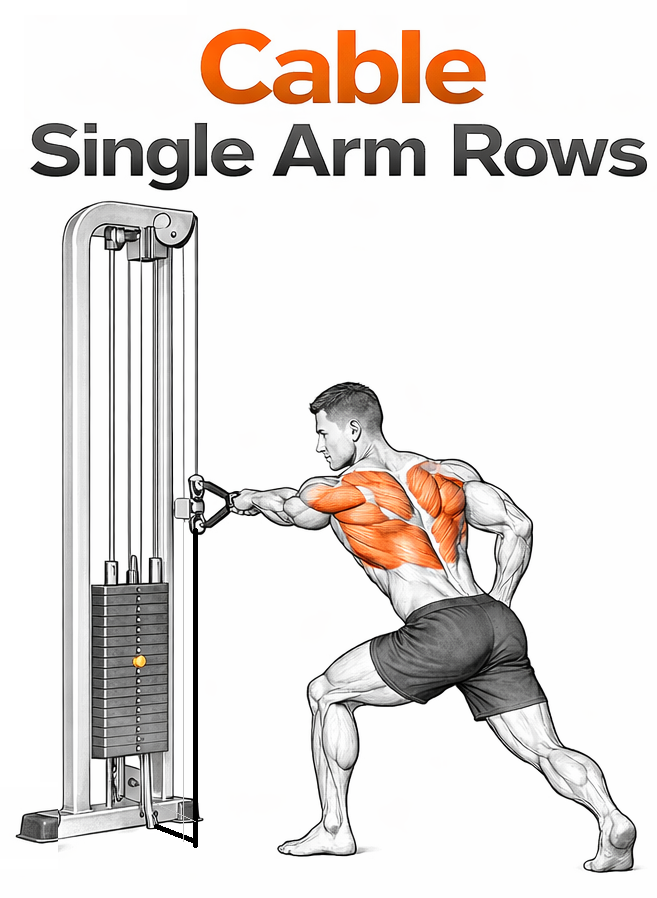
Cable Single Arm Rows
Single-arm cable row with the torso stable — adds anti-rotation demand to the standard cable row and exposes side-to-side imbalances.
Level: Intermediate
Primary: Back - Upper
Secondary: Biceps
Movement: Compound
Tags: Pull Unilateral
Type: Strength (Weight Lifting)
Equipment: Cable
Sports: Football Rugby Swimming Wrestling
Target muscles
The latissimus dorsi of the working side drives the pull. The rhomboids and middle trapezius retract the scapula. The posterior deltoid contributes when the elbow tracks wide. The biceps and brachioradialis assist at the elbow. The obliques and quadratus lumborum of the non-working side fire continuously to resist trunk rotation — the cable's pull tries to twist you, and your job is to fight that twist. This anti-rotation demand is what makes the single-arm version a different exercise from the bilateral row.
How to perform
Setup
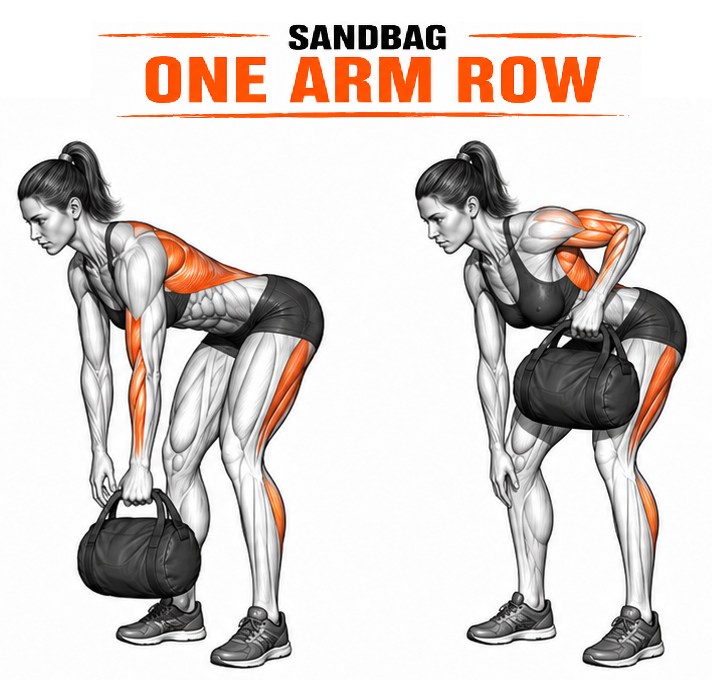
Set a cable to chest height with a D-handle. Stand facing the machine. Step one foot forward (the foot opposite the working arm) into a slightly staggered stance for stability. Grip the handle with the working hand. Step back to put tension on the cable. Trunk braced, chest up, shoulders down and back.
Execution
Pull the handle toward your hip on the working side by driving the elbow back. Squeeze the shoulder blade back at the end of the pull. The torso stays absolutely still — don't twist toward or away from the cable; the rotation should be entirely in the shoulder joint. Pause for a one-second peak contraction. Extend the arm forward under control to the fully stretched starting position, letting the lat lengthen. Complete all reps on one side before switching.
Common mistakes
- Twisting the torso to assist or to "follow through" the pull. The body stays square — this is the entire point of the unilateral version.
- Letting the working shoulder hike up to the ear. The shoulder stays down through the entire pull.
- Using too heavy a load and rotating the body. If you can't keep the torso square, drop the load.
- Pulling primarily with the biceps. The back leads; the arm assists.
- Not stretching the lat at the bottom. Let the arm extend fully on every return.
Progressions and regressions
Regress to seated cable rows (bilateral) until the row pattern is automatic. Single-arm dumbbell rows are a useful alternative for lifters without cable access. To progress, work pause single-arm rows (3-second pause at the contracted position), or alternate the staggered-stance setup (rear foot up on a low platform) for greater anti-rotation demand.
Programming notes
Excellent for exposing and correcting side-to-side back imbalances. 3-4 sets of 8-12 reps per side. Two times a week. Run the working sets off the weaker side's numbers; don't push the strong side harder just because it can do more. As accessory work after bilateral pulls, the single-arm version provides a different stimulus and stronger anti-rotation training.