Cable Lateral Raises
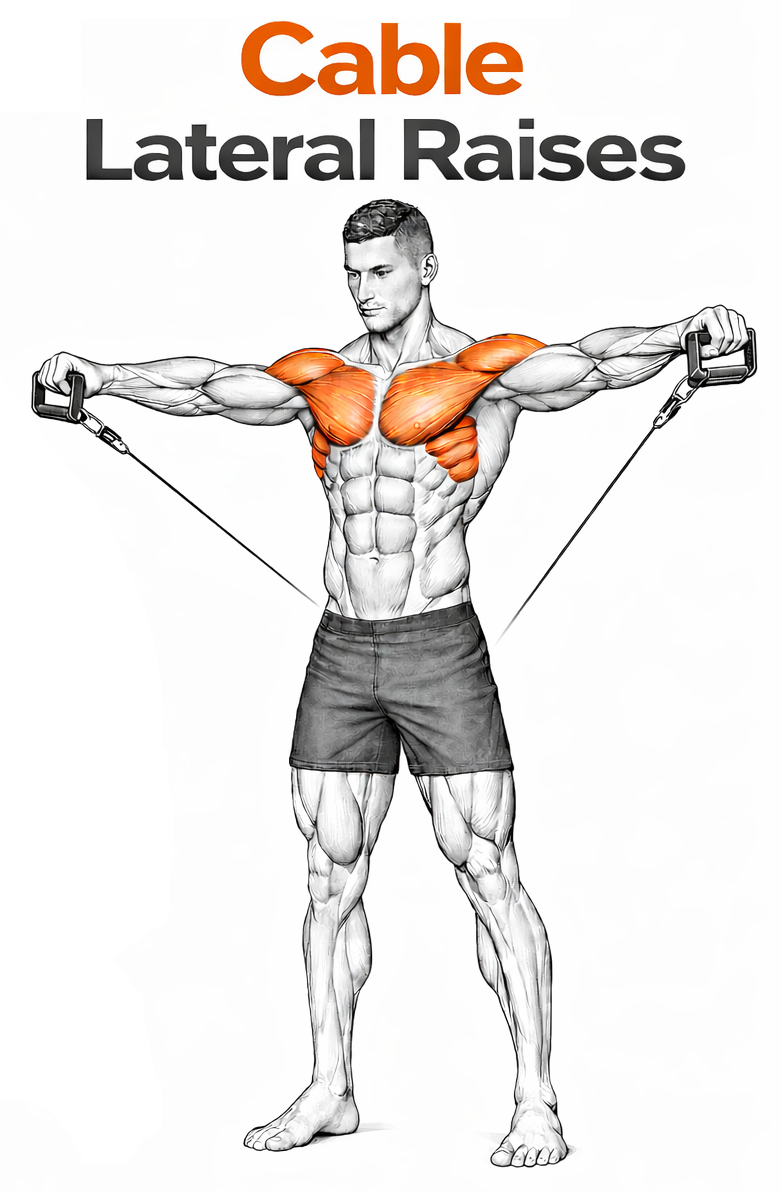
Cable lateral raise with the cable behind the body — constant tension through the lateral deltoid where a dumbbell loses load at the bottom.
Level: Beginner
Primary: Shoulder
Movement: Isolation
Type: Strength (Weight Lifting)
Equipment: Cable
Sports: Swimming Volleyball
Target muscles
The lateral (middle) deltoid is the prime mover through shoulder abduction. The anterior and posterior deltoids contribute lightly through different portions of the range. The supraspinatus initiates the abduction in the first 15 degrees. The serratus anterior holds the scapula stable as the arm travels out. What the cable does differently from a dumbbell: load is maintained at the bottom of the rep where the dumbbell would be at slack. That bottom-range loading is part of why cable lateral raises feel disproportionately hard relative to their weight.
How to perform
Setup
Set a cable to the lowest pulley with a D-handle attachment. Stand sideways to the cable. Grip the handle with the far hand — the hand farthest from the machine — and let the working arm cross in front of the body to the hip on the same side as the cable. The non-working hand can hold the machine for stability. Feet hip-width, slight knee bend, trunk braced.
Execution
Raise the working arm out to the side with a slight elbow bend that stays consistent. Lift to roughly shoulder height — going higher recruits the traps. The hand can lead the elbow slightly (elbow trailing, hand pointing down) to bias the lateral deltoid. Pause briefly at the top. Lower under control through the same arc back to the start across the body. The torso stays absolutely still; if it sways, the load is too heavy.
Common mistakes
- Going too heavy and shrugging. If the upper traps are doing the work, the load is too heavy. Drop it.
- Raising the arm higher than shoulder height. Stop at shoulder level — going higher loses the lateral-delt focus.
- Leaning the torso to lift the load. Body stays still.
- Bending the elbow more during the rep, which converts the lift into a partial upright row. Maintain a consistent slight bend.
- Rushing the reps. Slow controlled — two seconds up, one-second hold, two seconds down.
Progressions and regressions
Regress to dumbbell lateral raises until the cable pattern feels natural. To progress, work pause lateral raises (3-second hold at peak), drop sets (heavy set, drop weight by 30%, immediately rep to failure), or alternate single-arm cable raises with both arms simultaneously.
Programming notes
Accessory work after the main pressing volume. 3-4 sets of 12-15 reps per side. Two or three times a week. The lateral deltoid responds particularly well to high-volume, moderate-intensity work — chase reps and pump rather than load. Pair with rear-delt flyes and face pulls for a complete shoulder program.