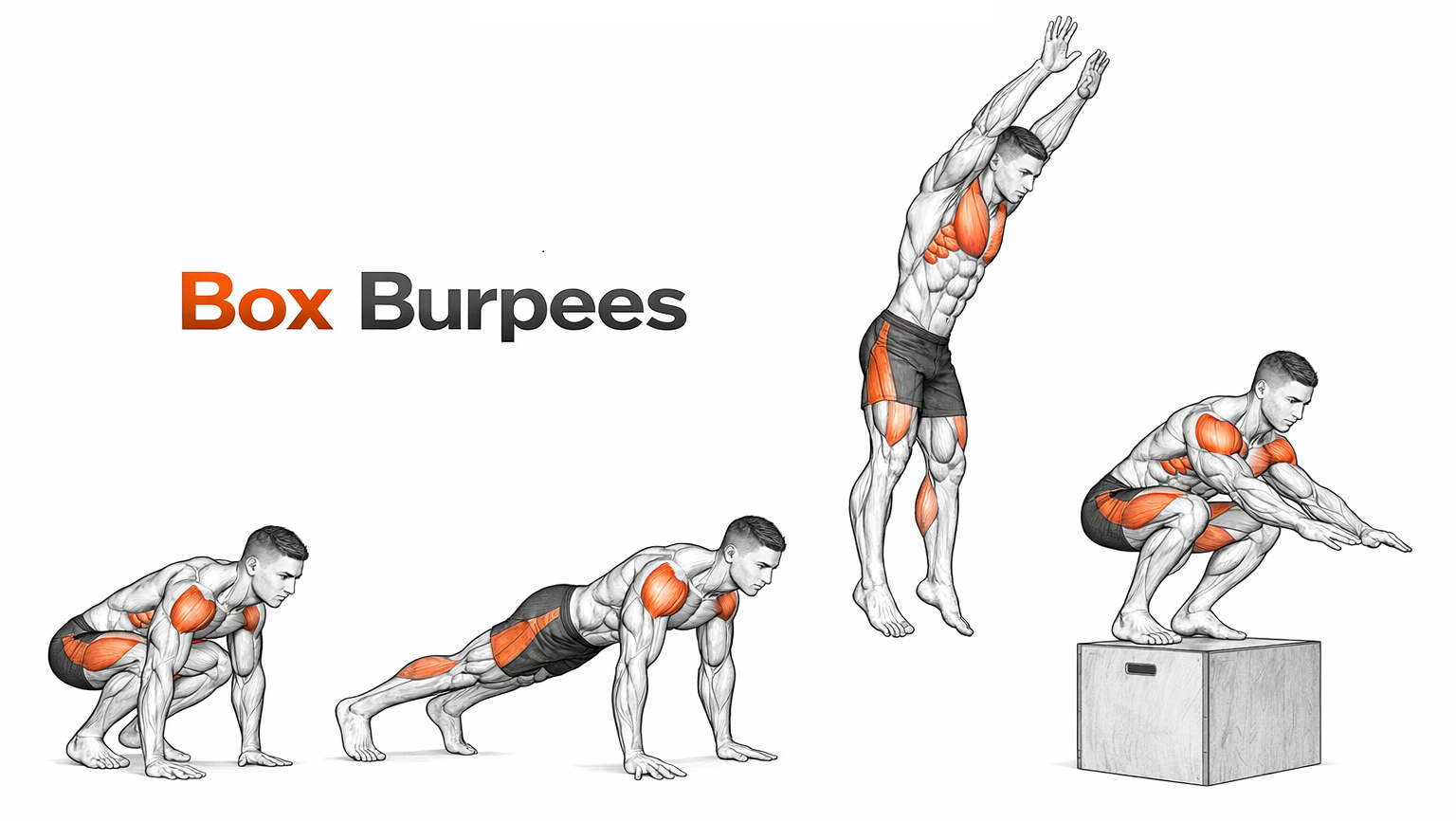
Box Burpees
Burpee into a box jump — combines the floor-to-stand transition of a burpee with the explosive plyometric of a box jump.
Level: Foundation
Primary: Cardio Full Body
Movement: Compound
Tags: Explosive
Type: Anaerobic Intervals (HIIT / Bootcamp / Circuit) Functional Fitness (Obstacle & Hybrid)
Equipment: Jump Box
Sports: Football MMA Rugby Wrestling
Target muscles
Everything. The push-up phase loads the chest, triceps, and shoulders. The squat-to-jump phase loads the quads and glutes. The landing on the box loads them again eccentrically. The trunk braces continuously to coordinate the transitions. The cardiovascular cost is enormous because the lift cycles between near-horizontal and near-vertical positions repeatedly — heart rate climbs faster than in almost any other unloaded movement.
How to perform
Setup
Stand facing a sturdy box (18-24 inches tall for most lifters). Arms at the sides, feet hip-width apart. Take a breath.
Execution
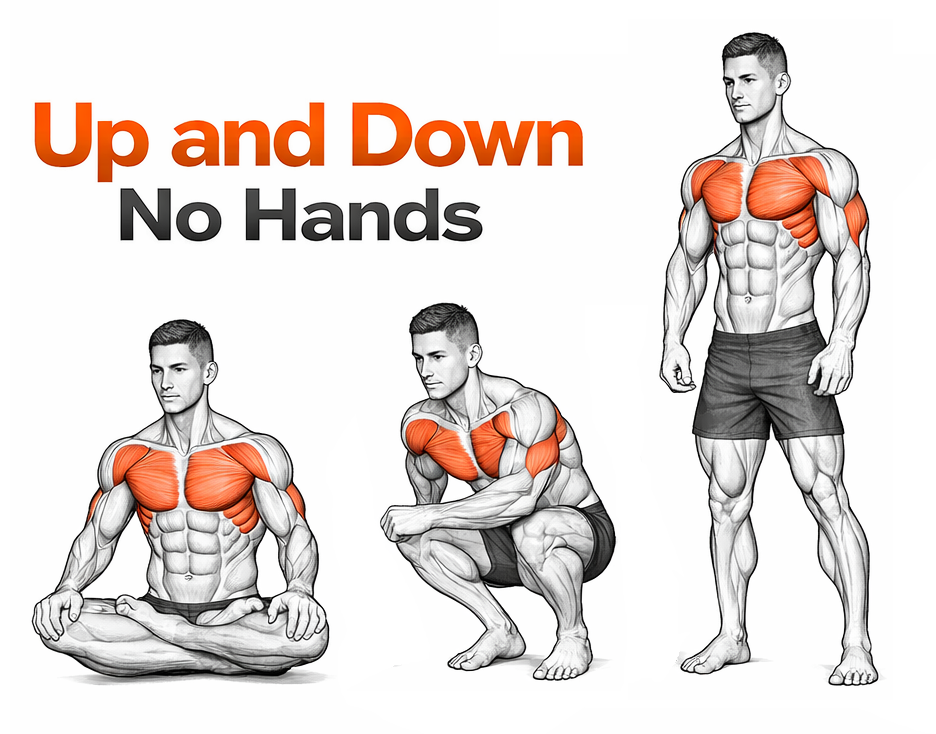
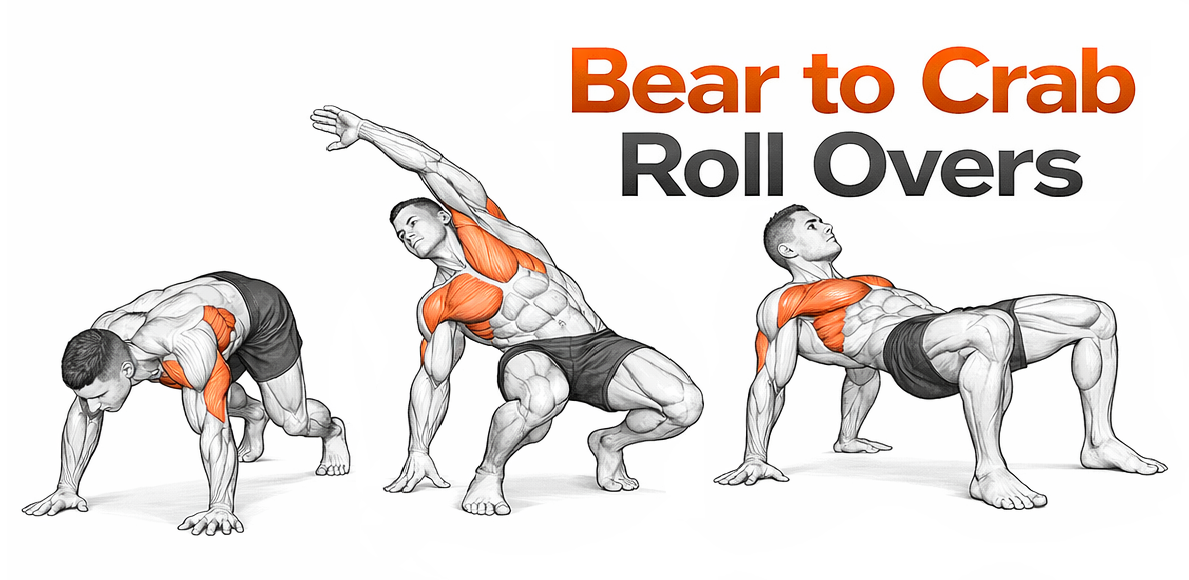
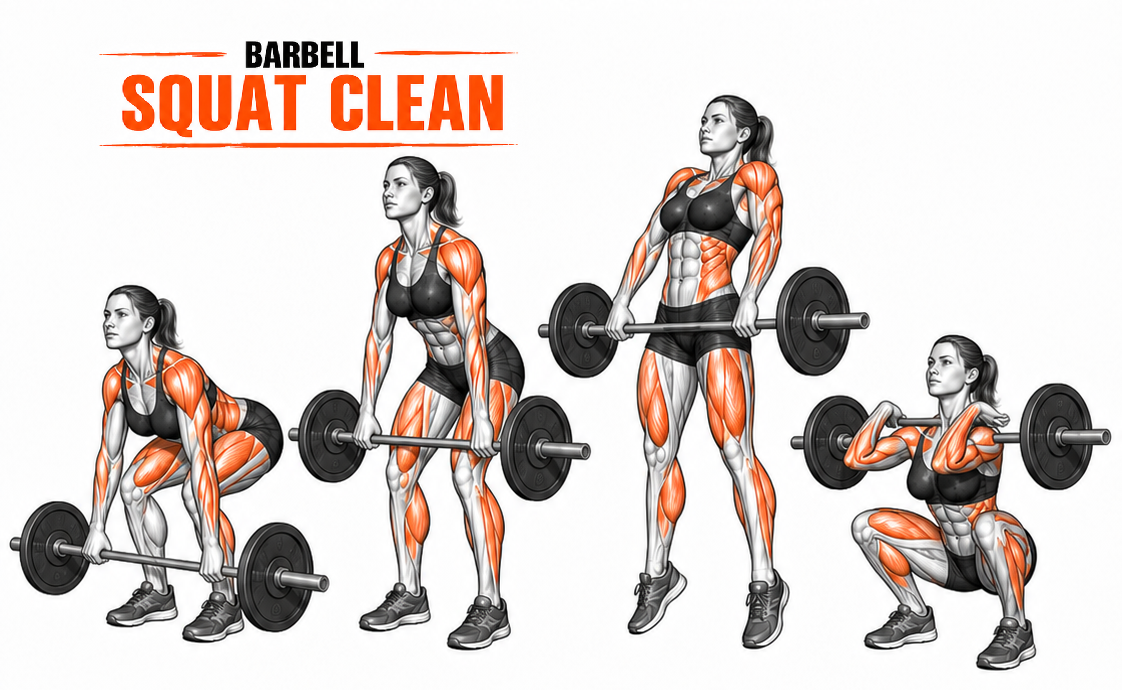
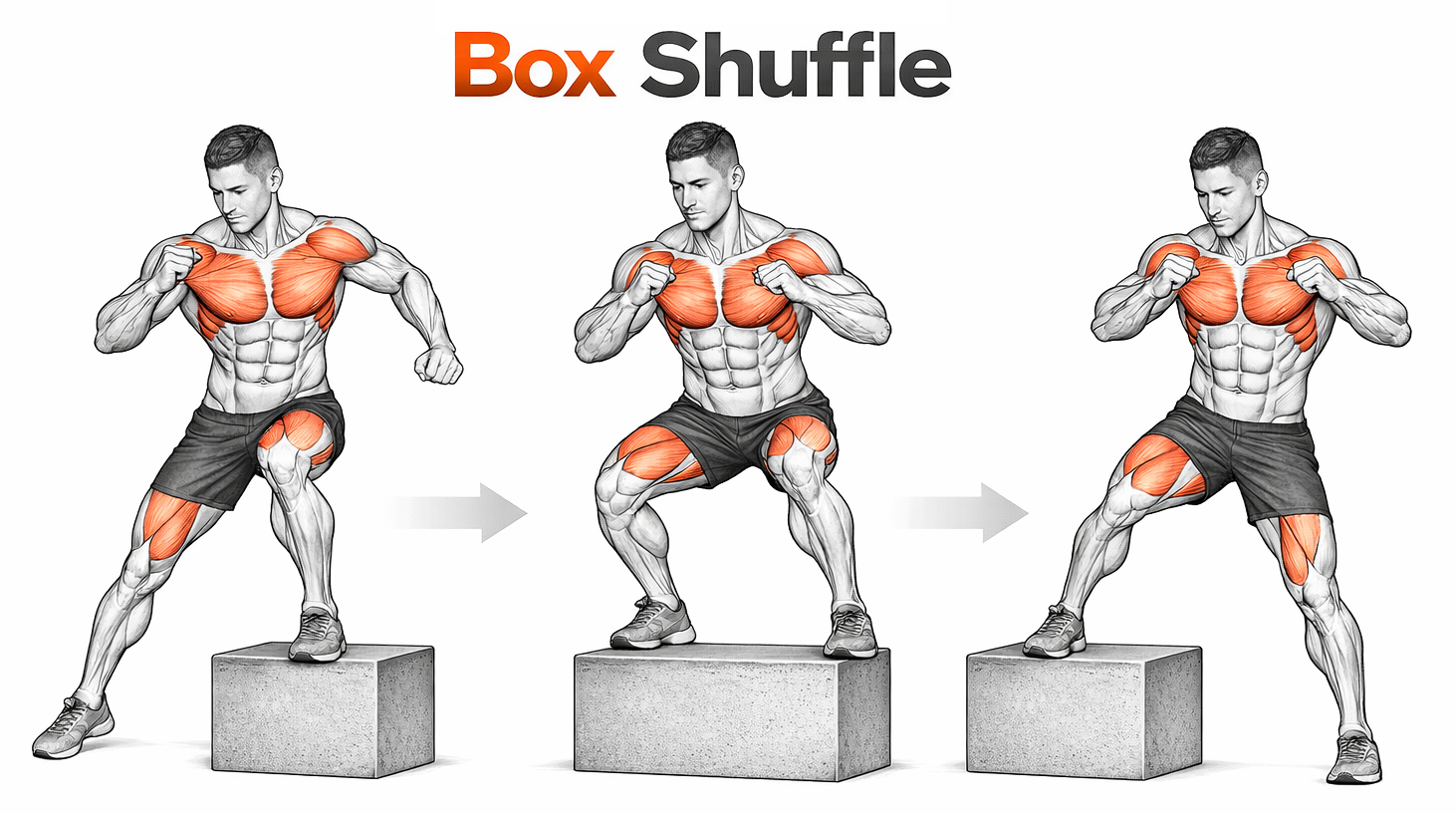
Squat down and place the hands on the floor. Kick the feet back to a plank position. Lower the chest to the floor (push-up). Press back up. Hop the feet forward back into a squat. From the squat position, drive through the legs to jump onto the box, landing softly with both feet, knees bent. Stand tall on the box. Step or jump back down. Repeat. The whole thing flows as one fluid sequence — don't pause between phases unless form is breaking.
Common mistakes
- Sagging at the bottom of the push-up. The body forms a straight line; the hips don't drop to the floor.
- Landing flat on the box. Land mid-foot with the knees and hips absorbing the impact.
- Stepping up onto the box instead of jumping. Step-ups are a regression — they're fine, but they're not a burpee.
- Dropping off the box instead of stepping or controlled-jumping down. Dropping from height with fatigue is how people roll ankles.
- Picking a box too tall for your real ability. The jump should be challenging but not your max — you'll be doing this when very fatigued.
Progressions and regressions
Regress to a step-up burpee (step onto the box instead of jumping) or a no-box burpee (just a regular burpee with a vertical jump). To progress, work for time (max reps in 60 seconds), use a taller box, or chain into a sequence with other plyometrics (box burpee + broad jump + box burpee).
Programming notes
High-intensity conditioning. EMOM format works well (5-10 reps at the top of every minute for 8-12 minutes), or interval training (30 seconds on / 30 seconds off for 8-10 rounds). Don't program for time-trial efforts more than once a week — the cumulative impact on the joints adds up fast. The box jump phase is the highest-injury-risk part; never sacrifice landing quality for speed.