Battle Ropes Thrusters
A rope thruster chaining a squat into an overhead rope drive, linking the quads and glutes to the shoulders in one explosive movement.
Level: Intermediate
Primary: Quads
Secondary: Cardio Glutes Shoulder
Movement: Compound
Tags: Push Squat
Type: Anaerobic Intervals (HIIT / Bootcamp / Circuit) Functional Fitness (Obstacle & Hybrid)
Equipment: Battle Ropes
Target muscles
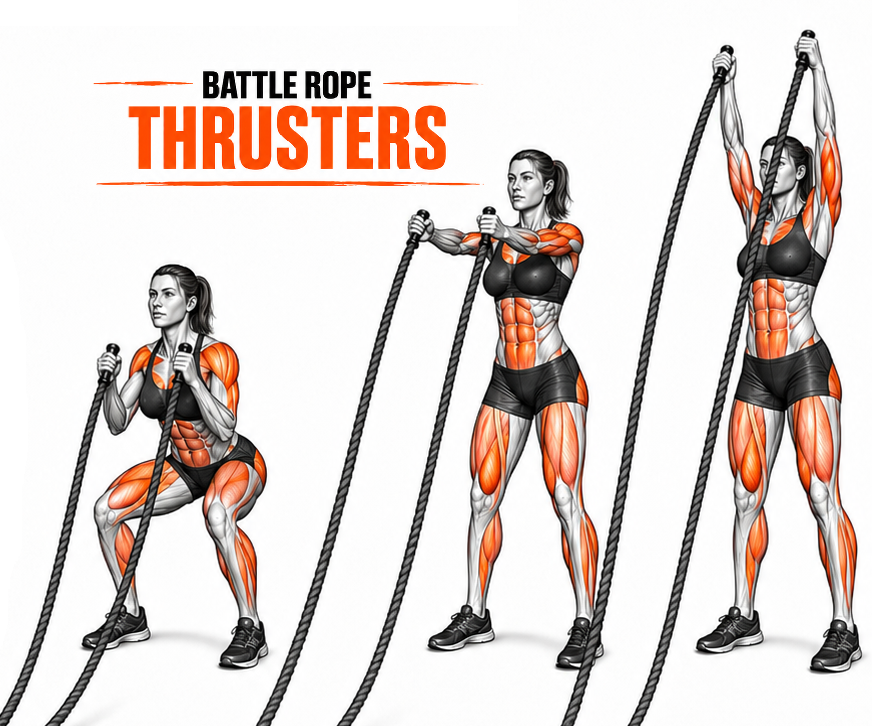
The quads and glutes drive the squat and supply the leg drive that powers the movement, making them the primary engine. That drive feeds into the shoulders, which raise and wave the ropes overhead as you stand, so the deltoids and triceps finish each rep. The forearms grip the ropes throughout, and the core braces to transfer force from the legs to the arms in one chain. The squat-to-overhead pattern repeated quickly drives the heart rate up, making it a strong full-body conditioning movement.
How to perform
Setup
Stand facing the anchor with a rope end in each hand and light tension on the line. Set the feet shoulder-width, hold the ropes low in front of the hips, and brace the trunk with the chest tall and the shoulders set down. Keep the knees soft and ready to track over the toes, and your weight balanced through the midfoot. Find the rope tension before the first rep so the squat and the overhead drive flow together from the start.
Execution
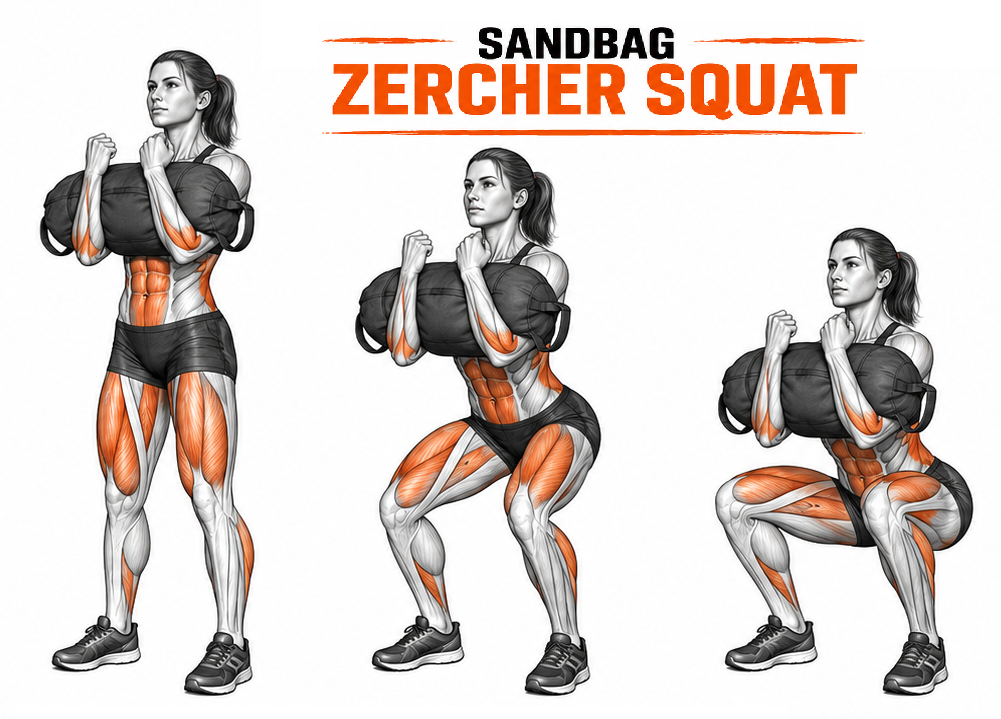
Sit the hips back and down into a squat to about parallel, keeping the chest up and the knees tracking over the toes. Drive explosively up out of the bottom, and use that leg drive to swing or wave the ropes up overhead as you reach standing. Lower the ropes back toward the hips as you descend into the next squat, blending the two halves into one smooth rep. Time the overhead rope drive to the leg drive so the movement flows as a single chain rather than a squat and an arm action stuck together.
Common mistakes
- Raising the ropes with the arms before the legs have finished driving, which breaks the efficient chain.
- Letting the knees cave inward or the chest fall forward in the squat.
- Squatting shallow so the legs contribute little drive to the overhead action.
- Arching the lower back hard as the ropes go overhead instead of bracing the ribs down.
Progressions and regressions
Regress by squatting shallower, slowing the tempo, or using lighter ropes until the squat-to-overhead timing is smooth and the chain feels connected. Progress by squatting deeper, driving the ropes higher and faster, lengthening the interval, or adding a slam at the top of each rep. A jump at the top turns it into a more explosive, plyometric thruster that taxes the legs and conditioning system considerably harder.
Programming notes
Use it as full-body conditioning, 4-8 rounds of 20-30 seconds or 8-12 reps with 30-60 seconds rest. It spikes the heart rate quickly, so it fits a HIIT block or a finisher rather than a slot before heavy lifting. Keep the squat depth honest and the rope drive timed to the legs, and prioritise smooth, repeatable reps over a frantic pace that wrecks the pattern.