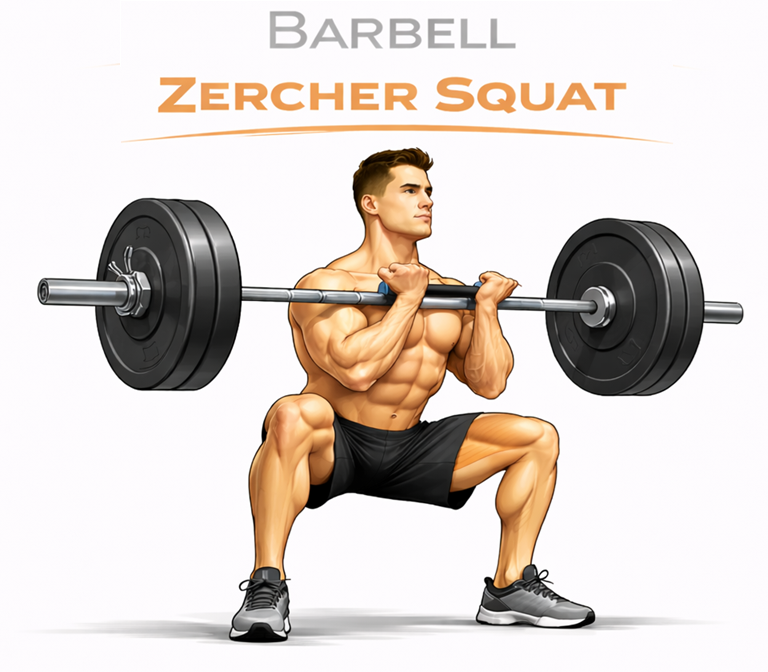
Barbell Zercher Squat
Squat with a barbell held in the crooks of the elbows — brutally upright torso position, devastating for the quads and trunk.
Level: Advanced
Primary: Quads
Secondary: Glutes Hamstrings
Movement: Compound
Tags: Squat
Type: Strength (Weight Lifting)
Equipment: Barbell
Sports: Basketball Football Rugby Track and Field Volleyball
Target muscles
The quadriceps take the bulk of the work — the bar position in the elbow crooks forces a near-vertical torso, which puts the knees in deep flexion at depth and loads the quads at a very disadvantageous angle. The gluteus maximus drives hip extension out of the bottom. The biceps brachii hold the bar isometrically through the full squat. The trunk muscles work intensely to fight the front-loaded position — abs, obliques, spinal erectors. The upper back and traps stabilize the bar against the chest.
How to perform
Setup
Set the bar in the rack at navel height. Pad the bar generously — Zercher loads on bare elbow crooks are not negotiable. Load the bar into the elbow crooks by stepping in close, bending the arms, and lifting the bar so it sits in the crooks. Wrap the forearms across the front of the bar. Big breath, brace, step back. Feet shoulder-width, toes slightly out.
Execution
Squat straight down — knees and hips break together — with the torso staying as upright as possible. The elbows stay tucked tight to the sides; the bar stays against the chest. Hit depth (hip crease below the top of the knee), or sit even deeper if mobility allows — the Zercher rewards deep squatting because the upright torso makes it natural. Drive through the full foot to stand, finishing with hips extended. The bar position will try to dump you forward at the bottom; stay rigid through the trunk and elbows.
Common mistakes
- Skipping the bar pad. Painful, distracting, and unnecessary.
- Letting the elbows drop or the chest fall forward at the bottom. The bar will roll out of your arms if you let position slip.
- Going too heavy too early. The trunk and biceps cap the load far below back-squat numbers — usually 60-70% of back squat at most.
- Cutting depth. The Zercher's whole appeal is the deep upright squat; shallow Zerchers don't make sense.
- Trying to rack the bar back into a normal squat rack. Set the rack to the right height before the set so the bar comes off the J-cups directly into the elbow crooks.
Progressions and regressions
Regress with goblet squats — same upright torso pattern with much less trunk demand. Move to the Zercher squat with very light loads (an empty barbell or a fat-bar) until the position is comfortable. To progress, work pause Zercher squats (3-second pause at the bottom), or alternate with front squats for variety in the upright-torso squat training.
Programming notes
Excellent for athletes who need extreme upright-torso strength (wrestlers, strongmen, athletes preparing for loaded carries). 3-4 sets of 5-8 reps. Once a week. The trunk and biceps demand is high enough that the Zercher squat shouldn't be the primary squat in a program for most lifters; it works best as a strong accessory or a primary squat variation in 4-8 week blocks.