Barbell Wrist Curls
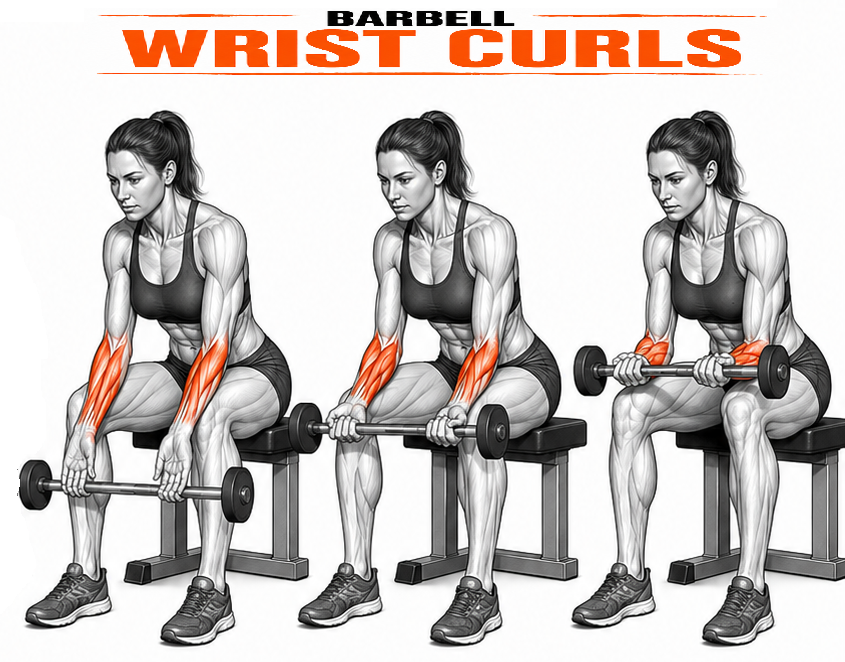
The forearm flexors curl a barbell using only wrist flexion, with the forearms braced on the thighs or a bench.
Level: Beginner
Primary: Forearms
Movement: Isolation
Type: Strength (Weight Lifting)
Equipment: Barbell
Target muscles
The wrist and finger flexors on the underside of the forearm — chiefly the flexor carpi radialis and ulnaris and the flexor digitorum — do all the work, flexing the wrist to curl the bar up. Bracing the forearms on the thighs or a bench isolates that small range so the biceps and shoulders stay out of it. It is a direct forearm-flexor and grip builder that strengthens the wrists for every heavier lift you hold.
How to perform
Setup
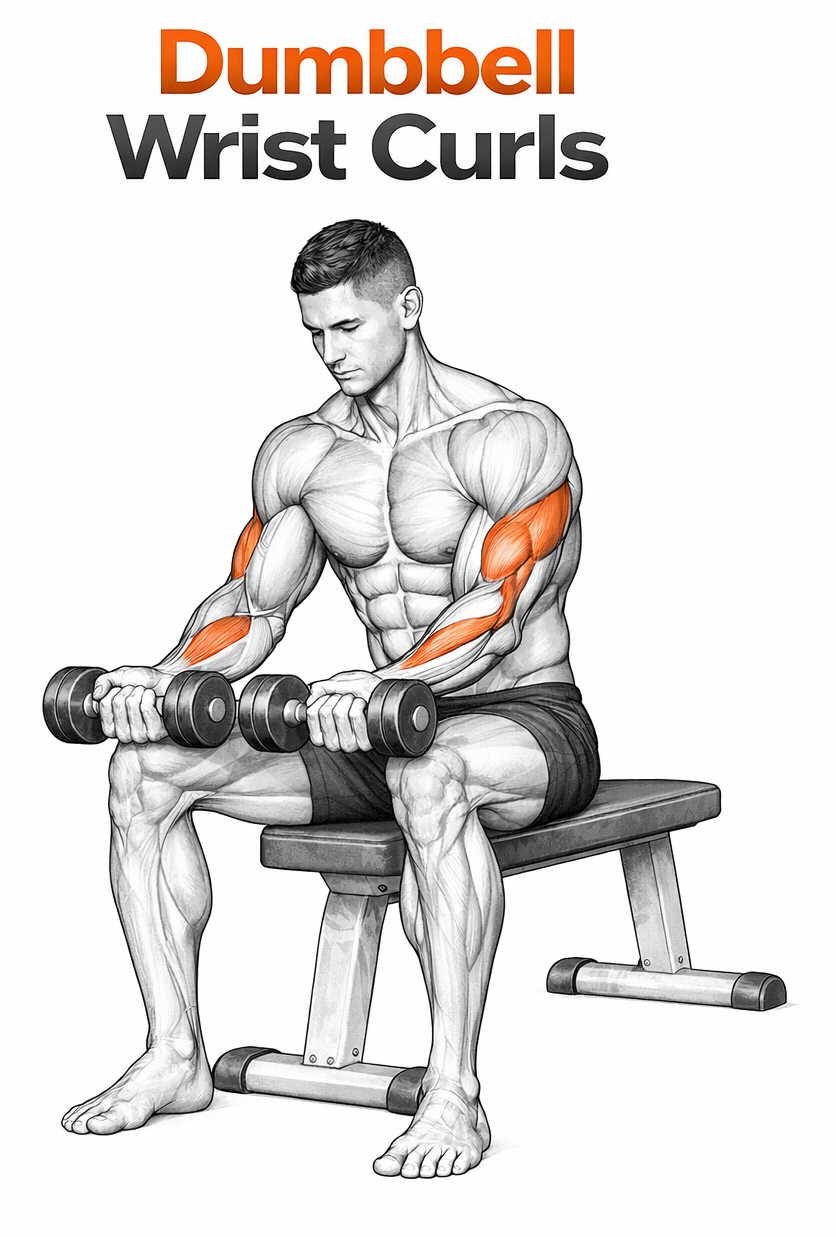
Sit on a bench and rest your forearms along your thighs, or on a bench pad, with the wrists hanging just past the edge of your knees, palms facing up. Hold a barbell with an underhand grip just outside your thighs and keep the forearms pinned down so only the wrists are free to move.
Execution
Lower the bar by letting the wrists extend and the fingers open slightly, feeling a stretch along the underside of the forearms. Then curl the bar up purely by flexing the wrists, rolling it back into the palms and lifting as high as the wrist will travel, squeezing the forearms at the top. Lower under control through the full range. Keep the forearms flat on the thighs the entire set — if the elbows or upper arms move, the isolation is lost. Move slowly and avoid bouncing out of the bottom.
Common mistakes
- Lifting the forearms off the thighs and recruiting the biceps instead of isolating the wrist flexors.
- Using a load so heavy the range collapses to a tiny twitch at the top.
- Bouncing the bar out of the bottom stretch rather than controlling it.
- Skipping the wrist-extension portion so the forearms never work through a full range.
Progressions and regressions
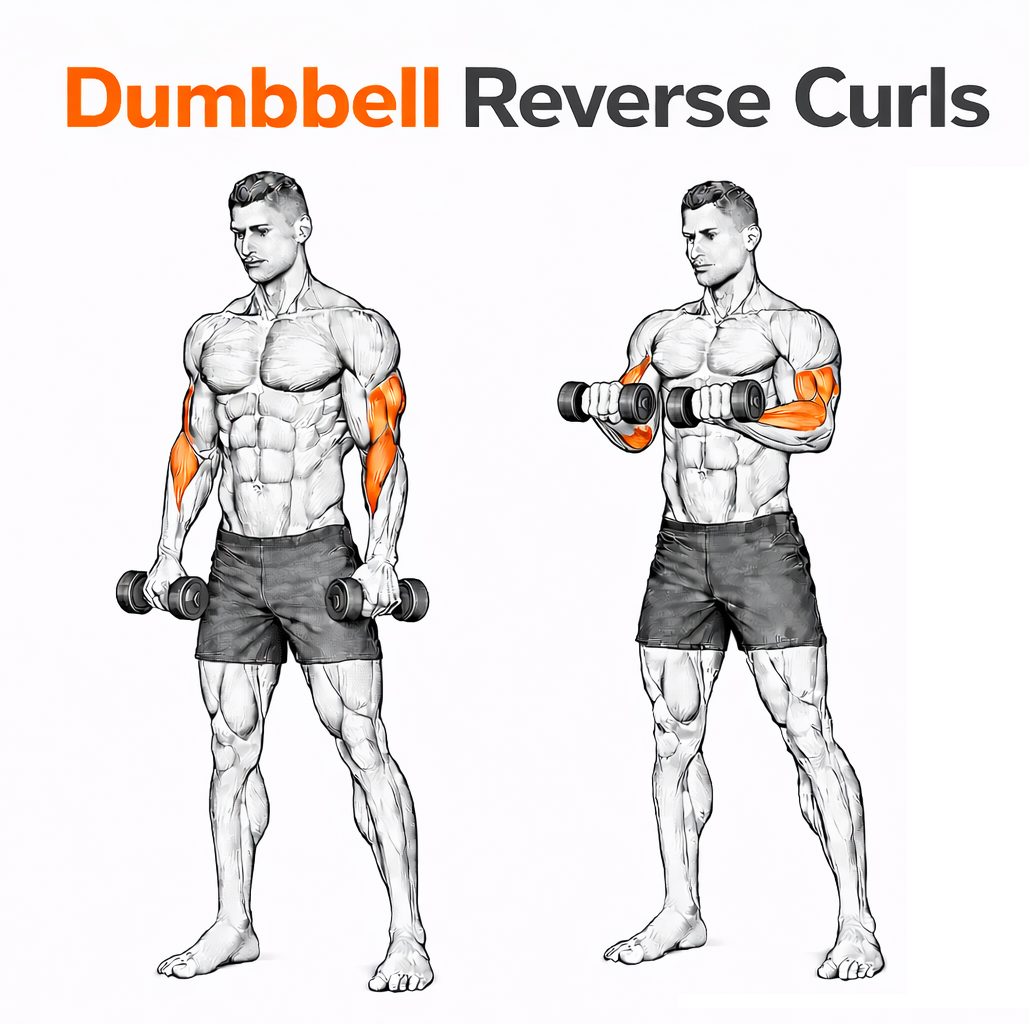
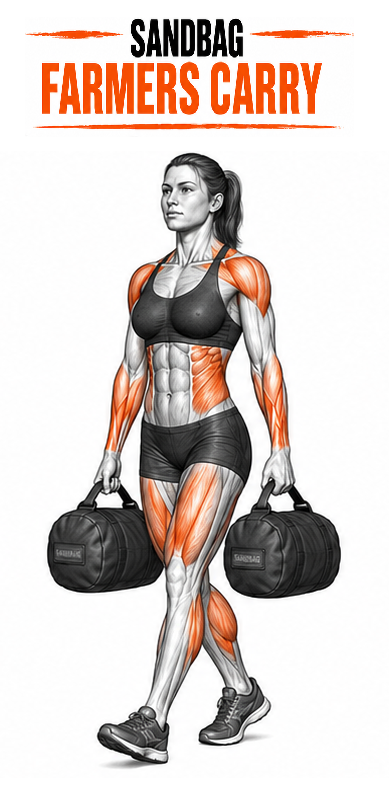
Regress to lighter dumbbells, which let each wrist work independently and reduce the load on a tweaky wrist. Progress by adding weight, slowing the lowering phase, or pausing in the stretched position. Pair them with reverse wrist curls (palms down) to train the extensors and keep the forearm balanced; behind-the-back barbell wrist curls are a standing variation worth rotating in.
Programming notes
Program them as forearm and grip accessory work, 2-3 sets of 12-20 reps, at the end of an upper-body or arm session. The forearms tolerate and respond to higher reps, so keep the load moderate and chase a strong contraction rather than heavy weight. They build grip and wrist resilience that carries straight over to rows, deadlifts and carries.