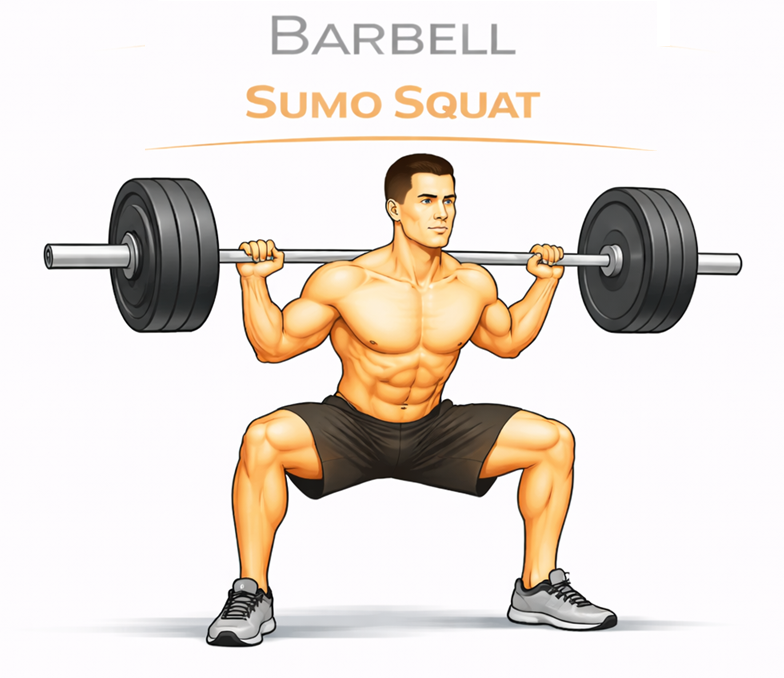
Barbell Sumo Squat
Wide-stance back squat with toes turned out — emphasizes the adductors and glutes through a more abducted hip position.
Level: Intermediate
Primary: Quads
Secondary: Glutes Hamstrings
Movement: Compound
Tags: Squat
Type: Strength (Weight Lifting)
Equipment: Barbell
Sports: Basketball Football Rugby Track and Field Volleyball
Target muscles
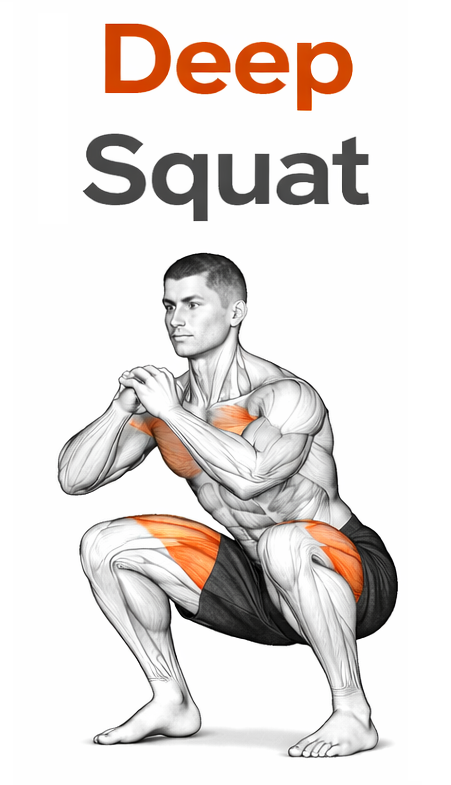
The adductor magnus is the standout target here — the wide stance and externally rotated feet put it in a strong loaded position throughout the squat. The gluteus maximus and quadriceps still drive the main work, but with more of the load distributing to the adductors and glutes than in a standard-stance squat. The hamstrings co-contract. The trunk braces against the bar load. The gluteus medius works overtime to keep the hips from collapsing into the wide stance.
How to perform
Setup
Set the bar in the rack at sternum height. Step under and rack the bar across the upper traps (high-bar position works best for sumo squats). Unrack, step back two clean steps, and set the feet considerably wider than shoulder-width with toes turned out about 30-45 degrees. Big breath into the belly, brace, then descend.
Execution
Push the hips back slightly and break at the knees and hips together. The knees track over the second toe — and with the toes turned out, that means the knees travel out laterally, not just forward. Descend to depth (hip crease below the top of the knee). The torso stays more upright than in a standard squat thanks to the wider hip position. Drive through the full foot to stand, with the knees pushing out actively throughout the lockout. Exhale near the top or through the sticking point.
Common mistakes
- Knees collapsing inward on the way up. The wide stance amplifies the problem; cue "knees out" actively from the bottom.
- Toes not turned out enough to match the wide stance. The toes need to point in the same direction as the knee path; misalignment irritates the knees.
- Hip dropping too low (ATG-style) with poor control. Stop at hip-below-knee depth for most lifters; the wide stance doesn't need extra depth.
- Standing the toes forward at the bottom while the rest of the foot is turned out. The whole foot turns out together.
- Loading without first owning the bottom position. The hip and adductor flexibility demand is real; build into the load over a few weeks.
Progressions and regressions
Regress to bodyweight sumo squats to learn the position. Goblet sumo squats (kettlebell or dumbbell at chest, sumo stance) build the pattern with less load and more upright torso. To progress, work pause sumo squats (3-second pause at depth), tempo sumo squats, or alternate with conventional back squats in the same program for stance variety.
Programming notes
Strong choice as a primary squat for lifters whose adductors limit conventional-stance depth, or as a secondary squat variation. 3-4 sets of 5-10 reps. Once or twice a week. Pair with conventional or front squats to round out the squat picture. The sumo squat is particularly useful for athletes whose sport demands lateral hip strength (wrestlers, MMA, hockey) because the adductor loading translates directly.