Barbell Standing Calf Raises
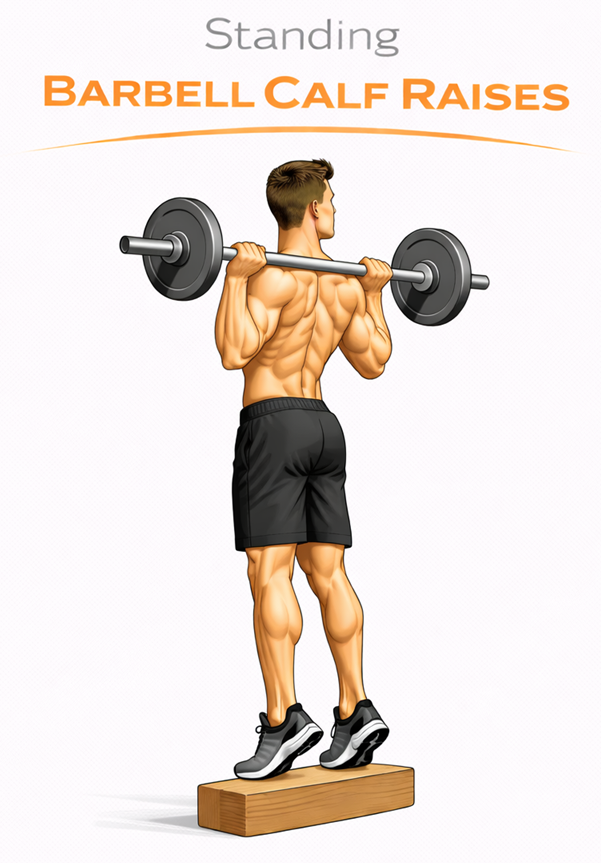
Standing barbell calf raise with the bar across the upper back — loaded straight-leg calf work that targets the gastrocnemius.
Level: Foundation
Primary: Calves
Movement: Isolation
Type: Strength (Weight Lifting)
Equipment: Barbell
Sports: Basketball Running Soccer Swimming Volleyball
Target muscles
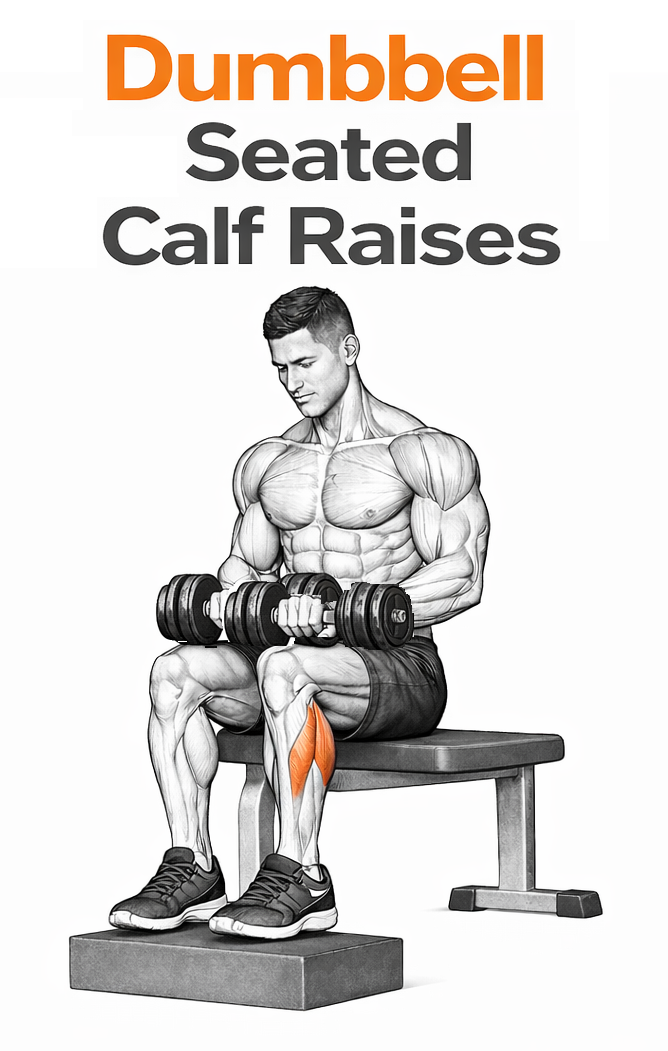
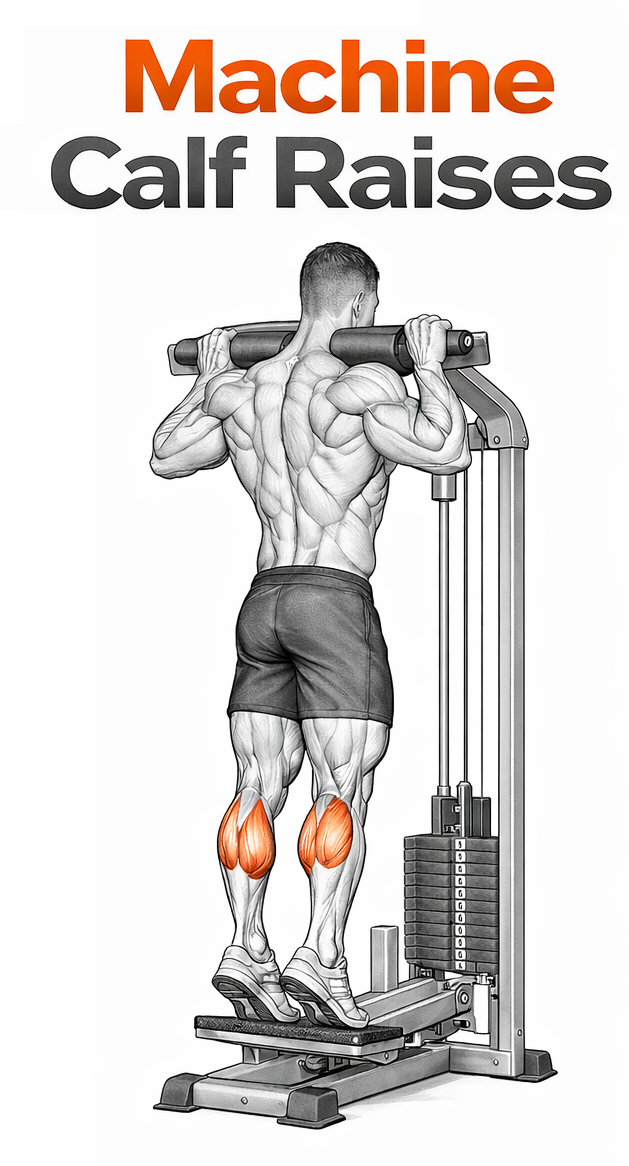
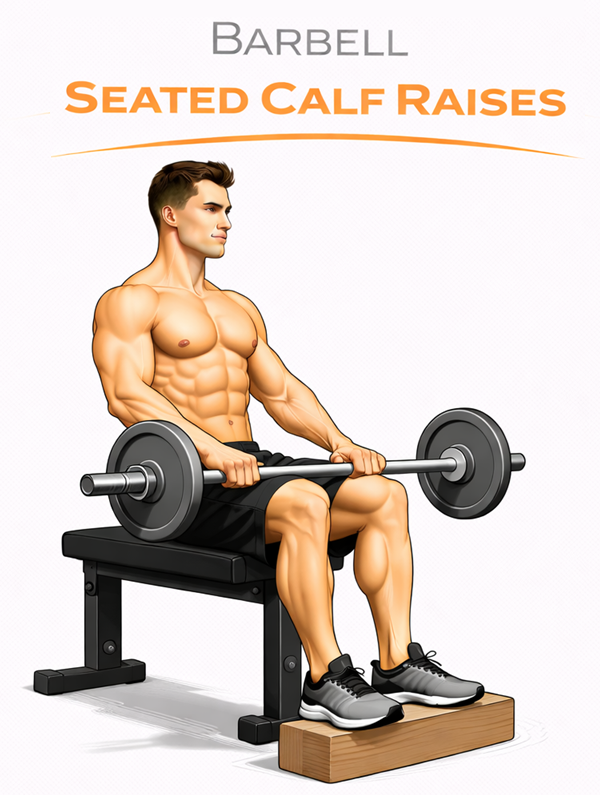
The gastrocnemius — the visible two-headed muscle of the upper calf — is the primary target here. The straight-leg position keeps the gastroc at functional length, which is the opposite of the seated calf raise. The soleus underneath contributes but does less than in the seated version. The intrinsic foot muscles, peroneals, and tibialis posterior all stabilize the ankle through the range. The spinal erectors brace against the bar load on the back.
How to perform
Setup
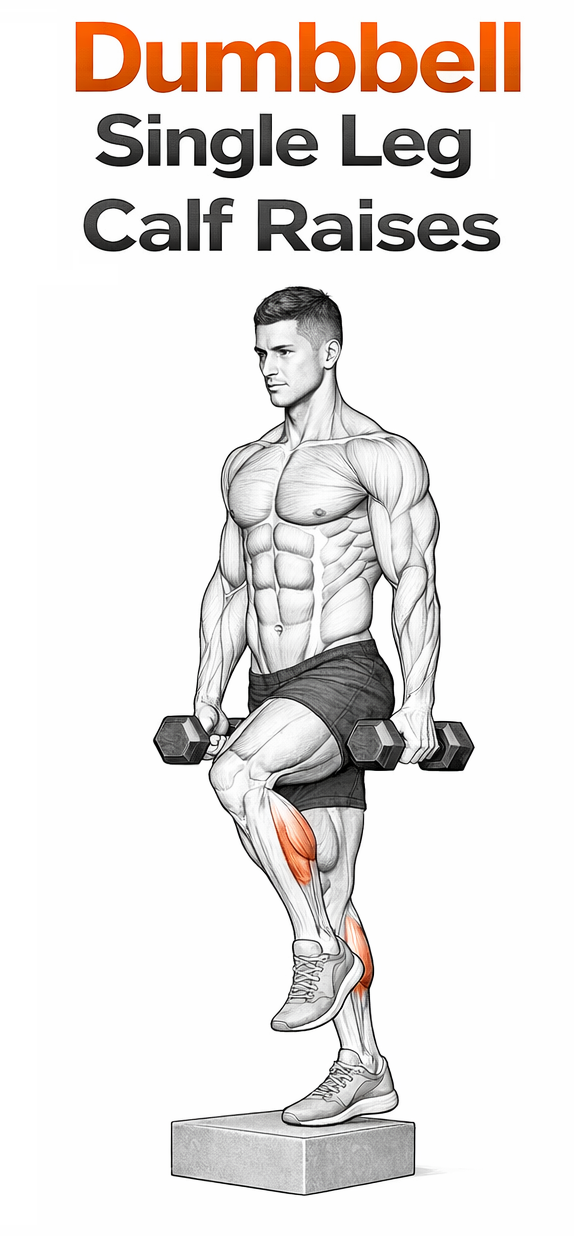
Set the bar in the rack at sternum height. Step under and place it high on the upper traps as for a back squat. Step out with the balls of the feet on a 2-3 inch raised surface — a sturdy block, a step, or a small wooden plank. Heels hanging off the back of the platform. Knees locked straight throughout the lift (a slight unlocking is fine, but no real bend). Feet hip-width apart. Big breath, brace.
Execution
Lower the heels by letting the ankles dorsiflex through the elevated platform — you should feel a strong stretch through the calf and Achilles. Then press the balls of the feet down to raise the heels as high as possible, squeezing the calves hard at the top. Pause for a one-second peak contraction. Lower under control over two to three seconds. Full range, every rep — cutting the range is the single most common error in calf training.
Common mistakes
- Loading the bar so heavy you can't reach a full peak position. Drop the weight and own the range.
- Bouncing through the bottom rather than stretching at the bottom. Pause briefly in the stretch position; the bottom range is where most of the gastroc stimulus lives.
- Bending the knees to "help." The point of the standing position is the straight-leg gastroc loading. Keep the knees locked.
- Letting the feet roll inward or outward as the load increases. Drive straight up through the balls of the feet.
- Skipping the eccentric. Two seconds down, every rep.
Progressions and regressions
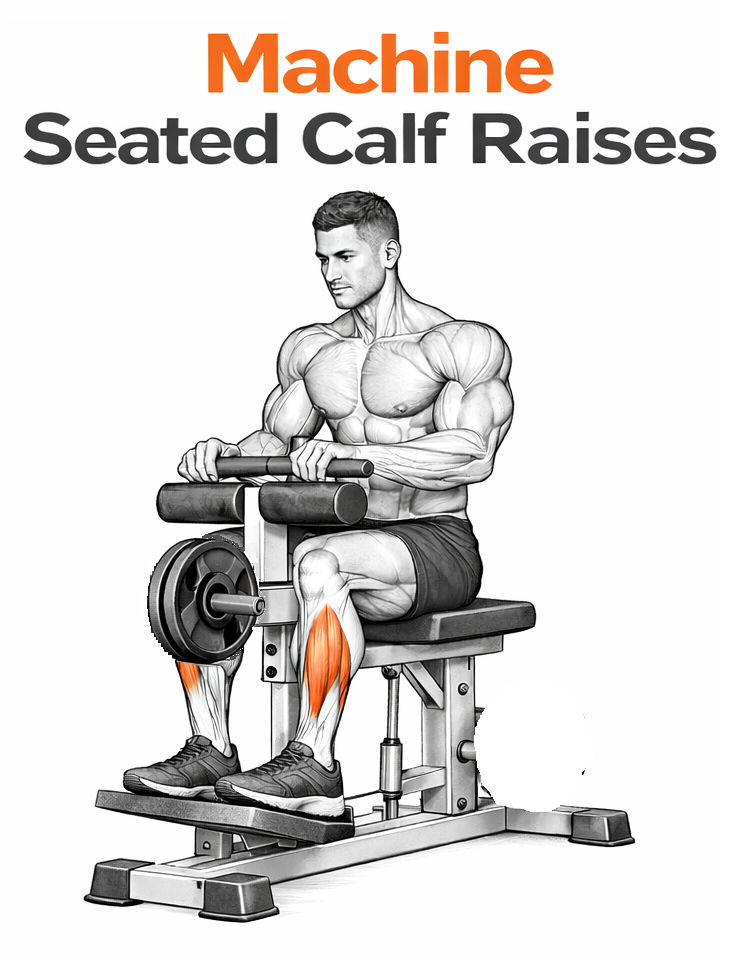
Regress to single-leg bodyweight calf raises until you can do twenty unbroken on each leg through a full range — single-leg work loads heavier per leg than two-leg bodyweight, often a useful pre-bar checkpoint. Use a dedicated standing calf raise machine if the bar bothers your back. To progress, work pause reps at peak contraction (3-second hold), 1-and-a-half reps, or single-leg standing barbell raises with a much-reduced load.
Programming notes
Pair with seated calf raises in the same program to hit both major calf muscles: standing for gastroc, seated for soleus. 3-4 sets of 8-15 reps with strict tempo, two or three times a week. Calves recover quickly and respond to high frequency. Don't program heavy calf work the day before a running session or a heavy squat day — the soreness extends to ankle stability and reduces ground-contact mechanics.