Plate Lunges
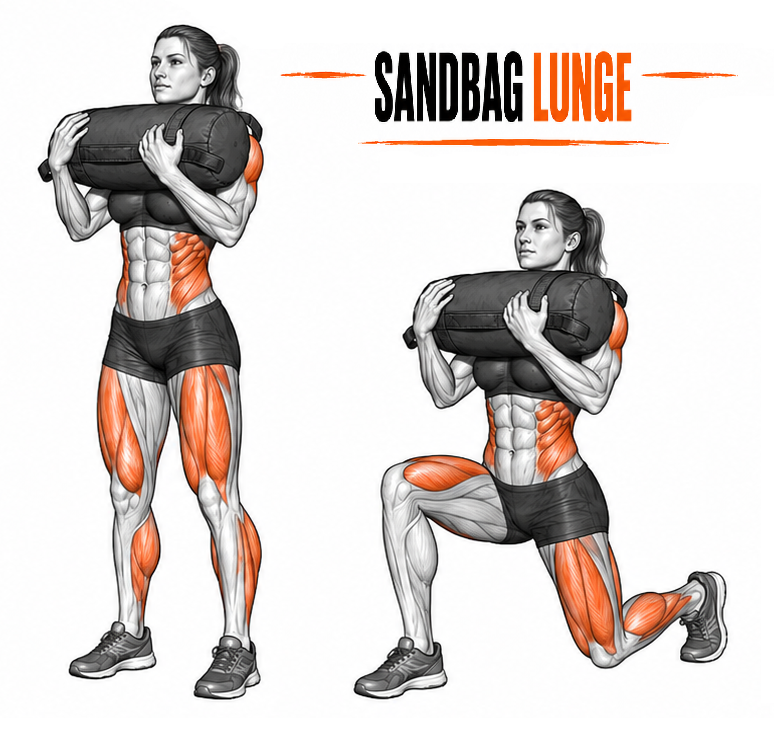
A forward or reverse lunge holding a plate at the chest, building single-leg strength in the quads and glutes with a simple loaded carry of the weight.
Level: Foundation
Primary: Quads
Secondary: Abs Glutes Hamstrings
Movement: Compound
Tags: Lunge Unilateral
Type: Strength (Weight Lifting)
Equipment: Plates
Target muscles
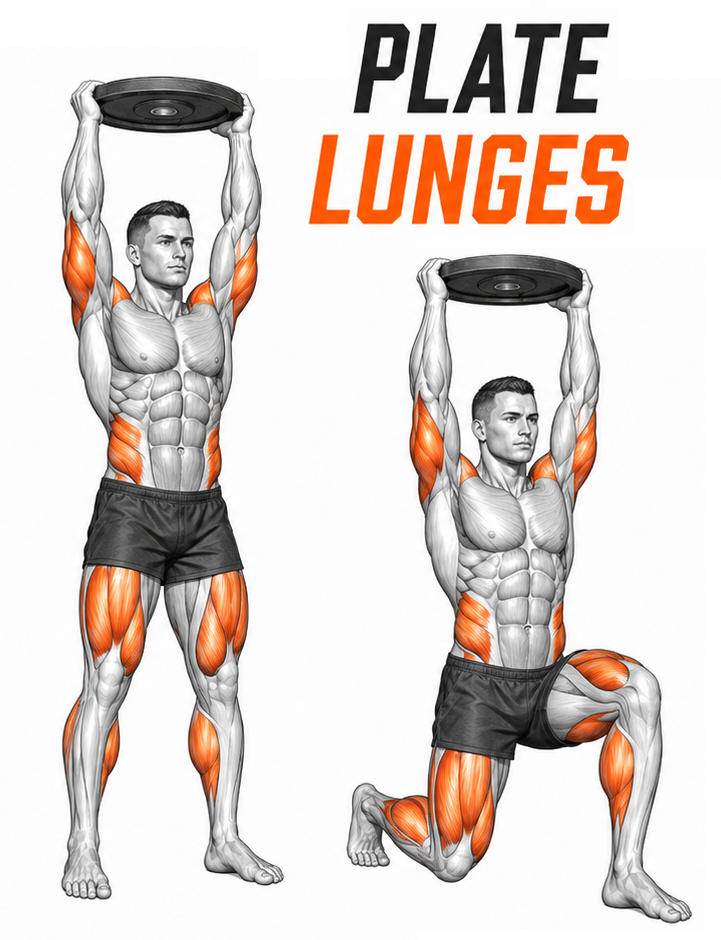
The lunge is a single-leg builder: the quad of the front leg extends the knee, the gluteus maximus and hamstrings extend the hip, and the calf and ankle stabilise the foot. Holding a plate at the chest adds load and shifts the centre of mass forward slightly, so the core braces to keep the torso upright. The gluteus medius works to keep the knee tracking and the pelvis level through each rep.
How to perform
Setup
Stand tall holding a plate against your chest with both hands, feet hip-width. Brace the core and set the shoulders down before stepping.
Execution
Step forward (or back) into a lunge, lowering until the front thigh is roughly parallel and the back knee hovers just above the floor. Keep the torso tall and the front knee tracking over the foot, not caving in. Drive through the front heel to return to standing, keeping the plate steady at the chest the whole time. Alternate legs or complete all reps on one side before switching. Each rep should be controlled, with a stable torso and a clean knee path.
Common mistakes
- Letting the front knee cave inward as you lower or drive up.
- Leaning the torso forward and shifting load off the working leg.
- Taking too short a step so the knee travels past the toes excessively.
- Pushing off the back foot instead of driving through the front leg.
Progressions and regressions
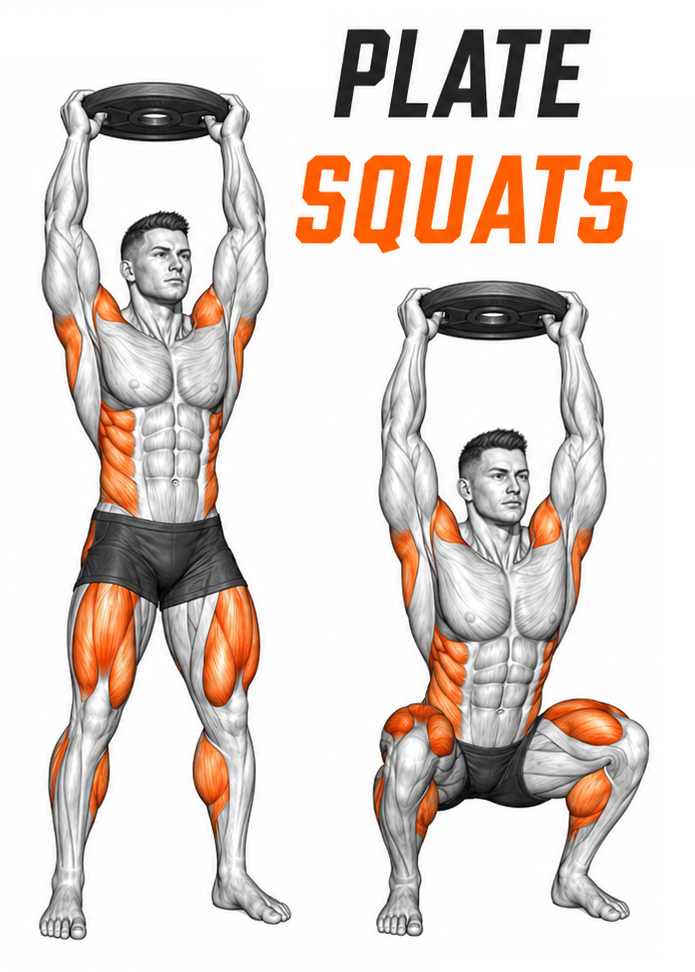
Regress to bodyweight lunges or a static split squat until the pattern is solid. Progress by using a heavier plate, adding a pause at the bottom, performing walking lunges, or holding the plate overhead for an added core and shoulder challenge.
Programming notes
Use it as a lower-body builder on leg or full-body days, 3 sets of 8-12 reps per leg. Lunges develop single-leg strength and expose left-right imbalances, making them a valuable complement to bilateral squats. Place them after the main squat or deadlift as accessory volume.