Hollow Body Hold
A gymnastics hollow hold that locks the entire anterior core into one rigid, dish-shaped line — a foundational stability skill.
Level: Foundation
Primary: Abs
Movement: Isolation
Tags: Core Stability
Type: ISO
Equipment: Body Weight
Target muscles
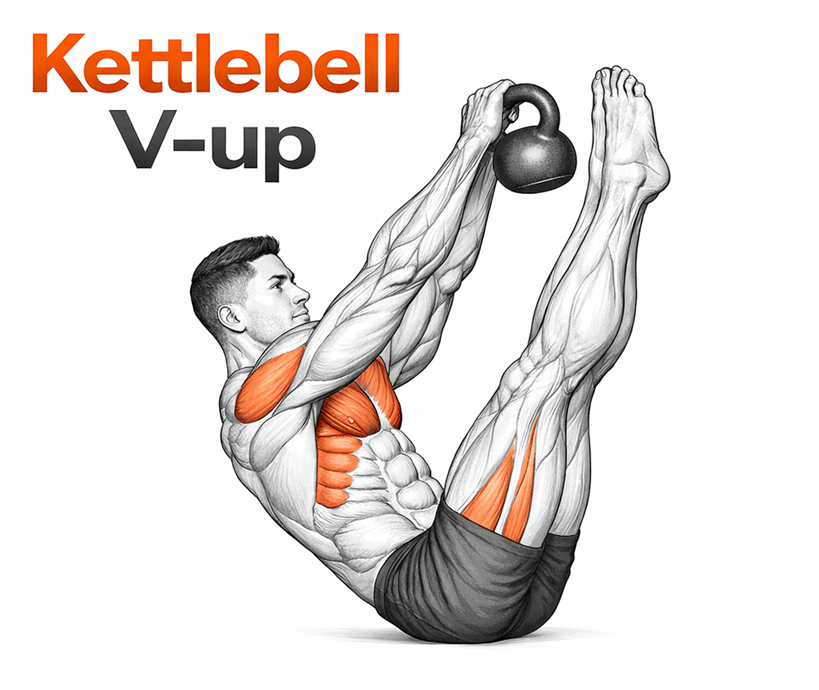
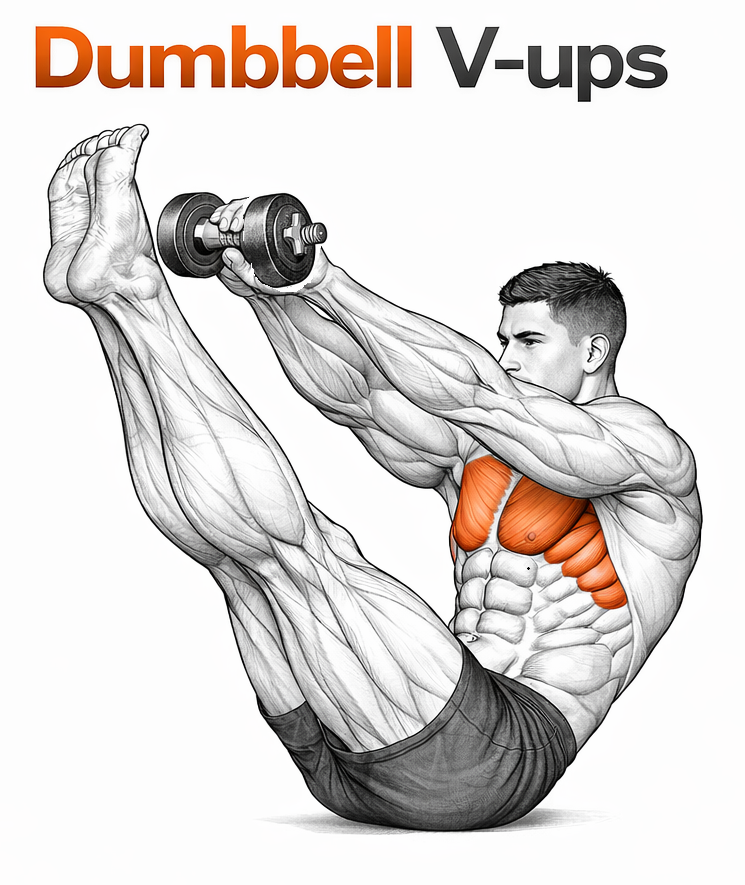
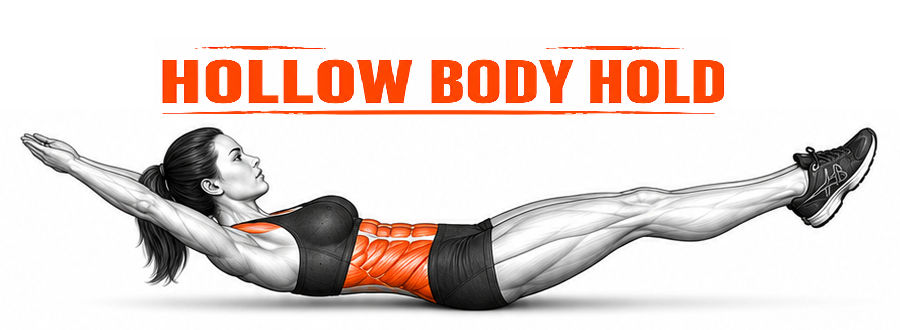
The rectus abdominis and transverse abdominis work isometrically to flatten the lower back into the floor and hold the dished position, with the hip flexors helping to keep the legs raised. The deep core stabilisers learn to keep the rib cage and pelvis connected — the exact bracing pattern that transfers to handstands, leg raises, and every loaded lift.
How to perform
Setup
Lie on your back, arms extended overhead and legs straight. Before lifting anything, press your lower back firmly into the floor by tilting the pelvis and bracing the abs.
Execution
Maintaining that flat back, lift your shoulder blades, arms and legs a few inches off the floor so your body forms a shallow banana or dish shape. Keep the arms by the ears and the legs straight and squeezed together. The lower back must stay glued down — if it lifts, you've lost the hold. Breathe in short, controlled breaths and hold the rigid shape for time.
Common mistakes
- Letting the lower back arch off the floor, which collapses the position and stresses the spine.
- Raising the legs too high so the hips bend and the abs disengage.
- Holding the breath, which makes the brace impossible to sustain.
- Bending the knees or letting the arms drift down to cheat the difficulty.
Progressions and regressions
Regress by tucking the knees, bending the arms across the chest, or raising the legs higher to shorten the lever until you can keep the back flat. Progress by extending the limbs fully, adding small hollow rocks, or holding a light object overhead. The tuck-to-full progression is the standard path.
Programming notes
Program it as core stability work, 3-5 sets of 15-45 second holds, or as a quality warm-up before gymnastics and overhead training. Stop the hold the instant the lower back lifts — a clean 20 seconds beats a broken 40. It's a skill as much as a strength exercise, so frequent short exposures pay off.