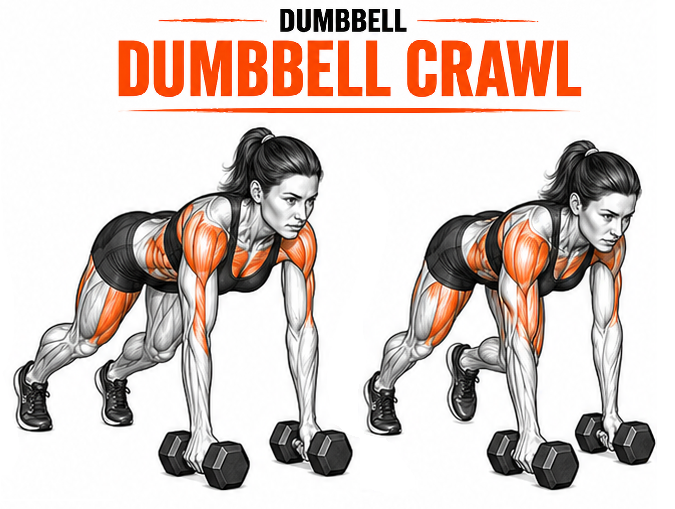
Dumbbell Crawl
A bear-crawl-style ground crawl gripping dumbbells, loading the shoulders and demanding fierce anti-rotation control.
Level: Intermediate
Primary: Full Body
Secondary: Abs Quads Shoulder
Movement: Compound
Tags: Animal Movement Anti-Rotation
Type: Functional Fitness (Obstacle & Hybrid) Primal Movments (Animal Flow-QMT Specifics)
Equipment: Dumbbell
Target muscles
Crawling on the hands and feet with dumbbells in the grip turns the whole body into a coordinated unit. The shoulders, serratus and triceps bear and stabilise the load, the abs and obliques resist the rotation each step wants to create, and the quads and hip flexors drive the locomotion. It's a primal, full-body anti-rotation challenge.
How to perform
Setup
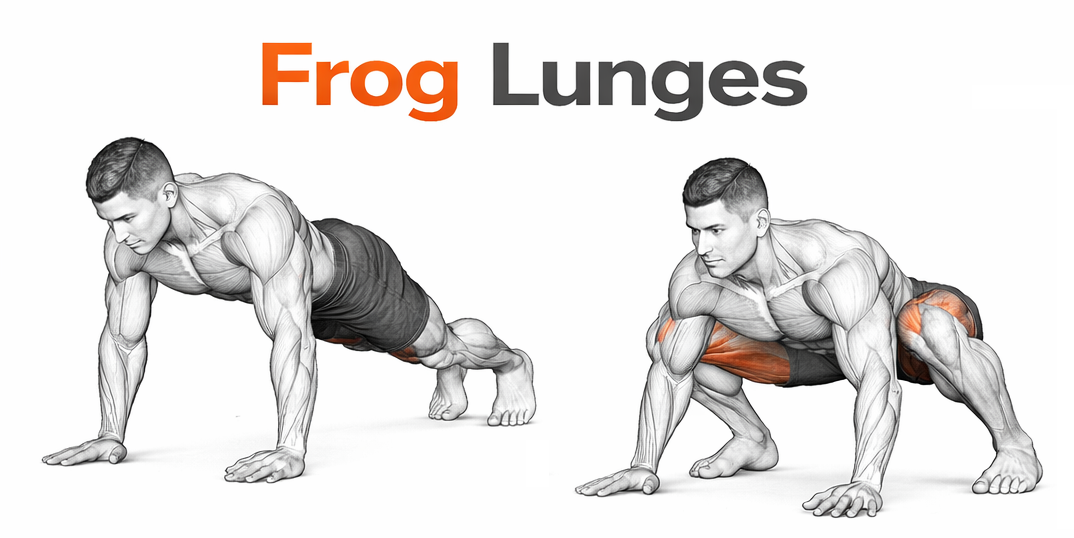
Grip a dumbbell in each hand and set up on hands and feet, knees hovering just off the floor, hips low, back flat — the bear-crawl position.
Execution
Crawl forward by moving opposite hand and foot together — right hand with left foot, then left hand with right foot — keeping the hips low and level and the knees close to the ground. Move slowly and deliberately so the dumbbells stay stable in the grip and the hips don't sway side to side. The challenge is keeping the torso quiet and square while the limbs travel. Crawl forward, then back, or for distance.
Common mistakes
- Letting the hips rock side to side, which signals the core has stopped resisting rotation.
- Raising the hips high so it becomes a downward-dog shuffle instead of a flat crawl.
- Moving same-side limbs together, breaking the cross-body coordination.
- Rushing so the dumbbells wobble and the shoulders lose stability.
Progressions and regressions
Regress to a bodyweight bear crawl to own the pattern before adding load. Progress by using heavier dumbbells, crawling longer distances, or adding a row at the top of each step. Keep the hips low — raising them is the most common way the movement gets easier by accident.
Programming notes
Program it as full-body conditioning or core work, 3-4 sets of 10-20 metres or 30-40 seconds. It fits warm-ups, circuits and bootcamp formats, and builds shoulder stability and anti-rotation strength that carries to carries and crawling-position drills. Keep loads light to moderate so coordination stays clean.