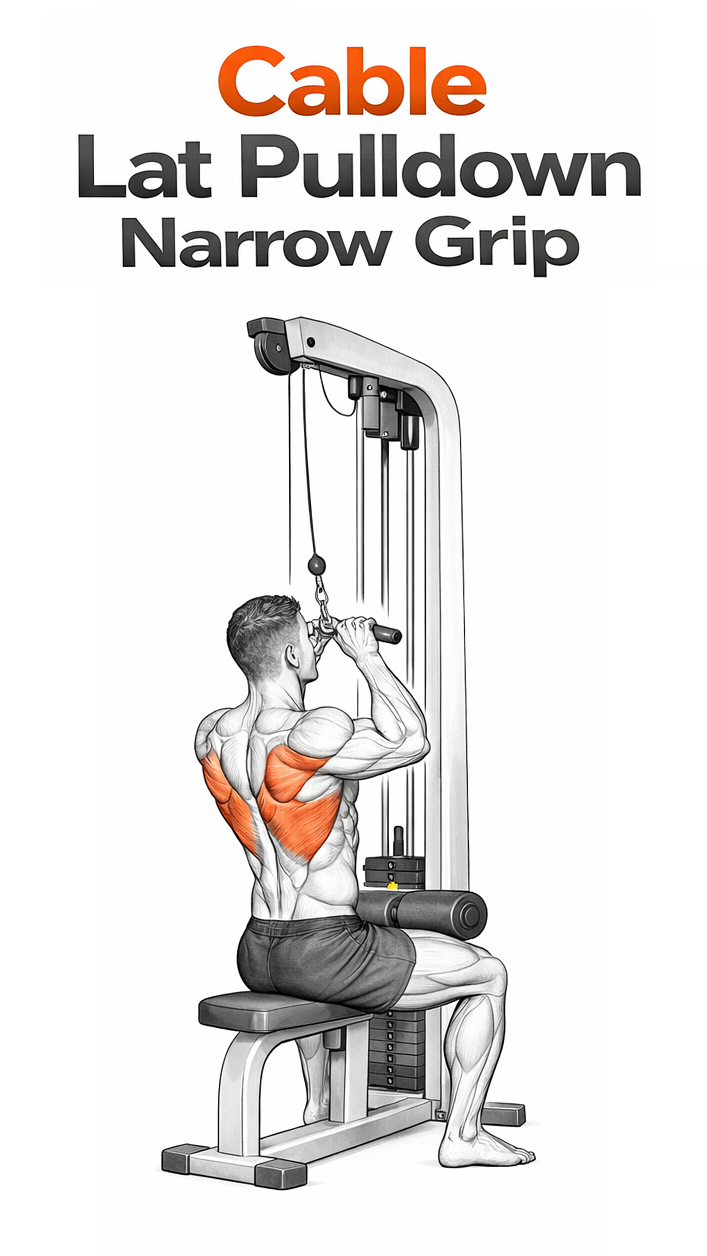
Cable Lat Pulldown Narrow Grip
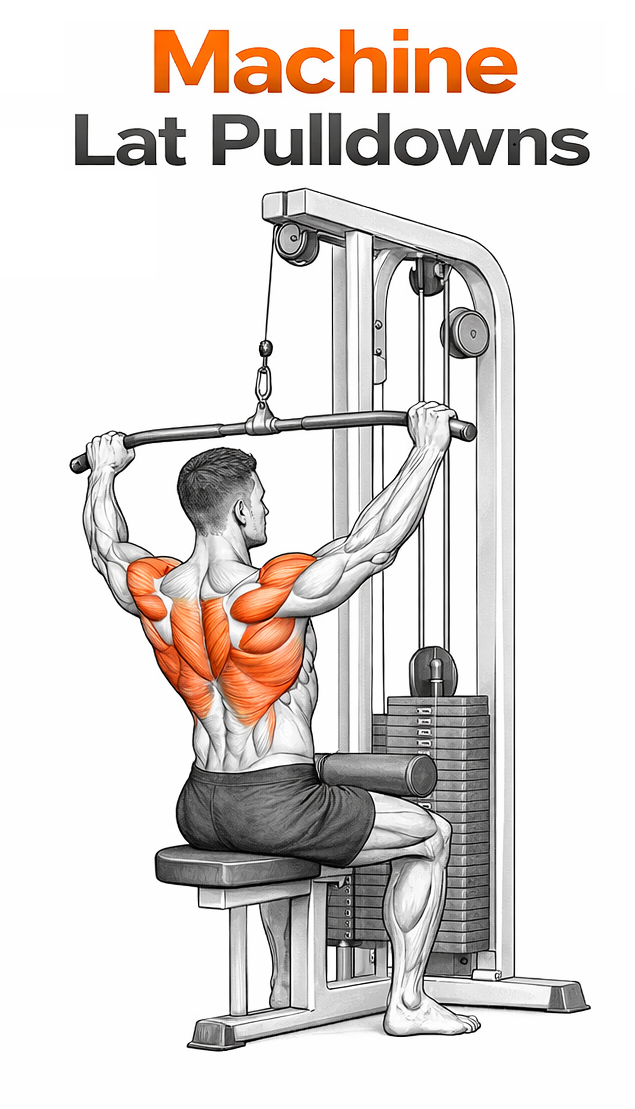
Cable lat pulldown with a V-bar or close grip attachment — pulls down to the upper chest, emphasizing the lower lats and biceps.
Level: Foundation
Primary: Back - Upper
Secondary: Biceps
Movement: Compound
Tags: Pull
Type: Strength (Weight Lifting)
Equipment: Cable
Sports: Football MMA Rock Climbing Rugby Swimming Wrestling
Target muscles
The latissimus dorsi drive the pull, particularly the lower fibers thanks to the narrow grip and the bar-to-upper-chest path. The rhomboids and middle trapezius retract the scapulae at the bottom of the pull. The biceps brachii, brachialis, and brachioradialis assist significantly — the close neutral or supinated grip puts the biceps in a strong working position, which is why narrow-grip pulldowns often produce noticeable biceps growth as a side effect. The serratus anterior stabilizes the scapula through the descent.
How to perform
Setup
Sit at a lat pulldown machine with a V-bar or narrow neutral-grip handle. Adjust the thigh pads snugly. Grip the attachment with hands roughly shoulder-width apart, palms facing each other. Pull the bar down slightly to take the slack out, then sit tall with a moderate backward lean — about 15-20 degrees off vertical. Chest up, shoulders down and back, lats engaged.
Execution
Pull the bar down to the upper chest by driving the elbows down and back. Squeeze the shoulder blades together at the bottom — the bar should nearly touch the chest. Pause for a one-second contraction. Return the bar under control to the full overhead extension, letting the lats stretch fully. Don't let the cable pull the body upward; the torso should stay in place through the full set, with only the arms cycling.
Common mistakes
- Leaning back too far to use body english. A small backward lean is fine; throwing the body backward is a different exercise.
- Pulling the bar to the chin or upper chest instead of the chest. Pull to where you can squeeze the lats hard — usually the upper-chest line.
- Stopping the bar short of the chest because the load got heavy. If you can't pull to the chest, drop the load.
- Cutting the top of the range. Full overhead extension at the top — let the lats stretch.
- Pulling primarily with the biceps. The biceps assist; the lats lead. If your arms are gassing before your back, drop the load and re-cue.
Progressions and regressions
Regress to assisted pull-ups or banded pull-ups to build the same pattern with bodyweight loading. The wide-grip lat pulldown is the standard variation if narrow-grip aggravates the elbows. To progress, work weighted neutral-grip pull-ups (free-hanging from a bar, weight belt attached), pause pulldowns (3-second pause at the chest), or single-arm cable pulldowns for unilateral focus.
Programming notes
Excellent primary back movement. 3-4 sets of 8-12 reps, two times a week. Pair with rows for a complete back program — pulldowns emphasize vertical pulling, rows emphasize horizontal pulling, both should be in any well-balanced back routine. The narrow grip is friendlier to most lifters' elbows than the wide grip; use it as the main pulldown for most blocks.