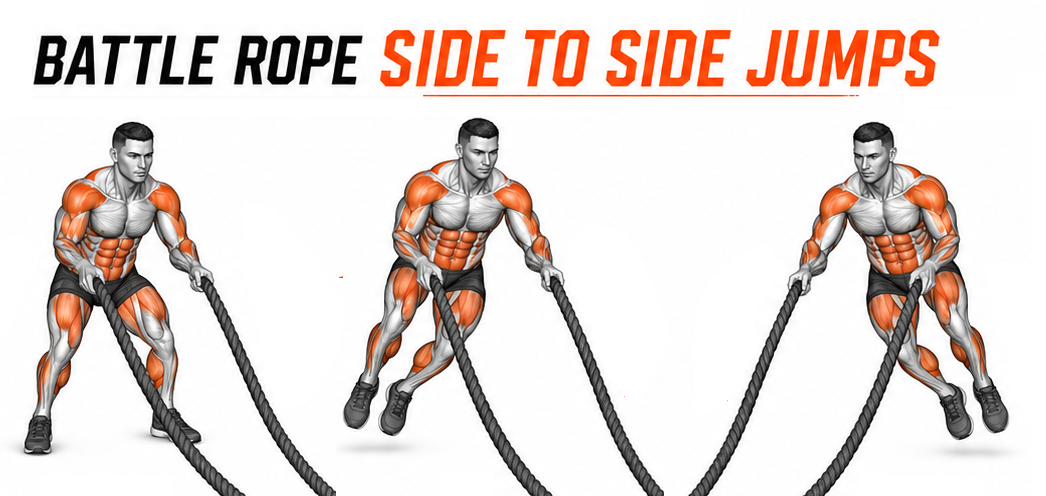
Battle Ropes Side to Side Jumps
Lateral skater hops side to side while the ropes keep moving, blending explosive frontal-plane power with hard upper-body conditioning.
Level: Intermediate
Primary: Cardio
Secondary: Glutes Quads Shoulder
Movement: Compound
Tags: Explosive
Type: Anaerobic Intervals (HIIT / Bootcamp / Circuit) Plyometric
Equipment: Battle Ropes
Target muscles
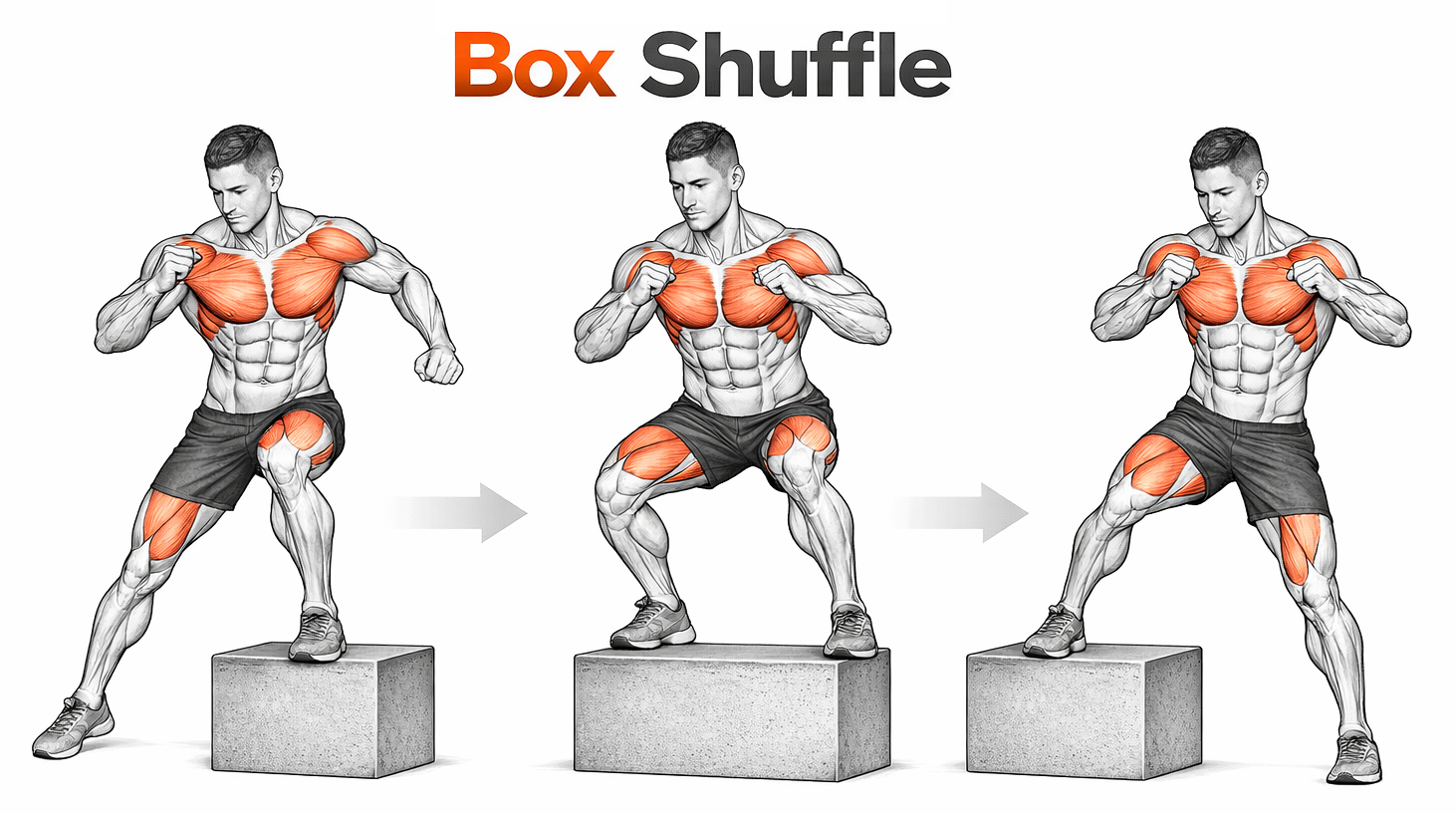
Conditioning is the headline, with the lateral hops and continuous arm work combining to push the heart and lungs hard. The quads, glutes and especially the gluteus medius drive and control the explosive side-to-side bounds, while the calves handle each takeoff and landing. The shoulders and forearms keep the ropes moving the whole time, and the core braces to keep the torso stable as the body bounds laterally and the arms work, tying the effort together.
How to perform
Setup
Stand facing the anchor with a rope end in each hand and light tension on the line. Set a shoulder-width athletic stance, soften the knees, and brace the trunk with the chest tall and the shoulders set down. Load the hips back slightly and keep your weight over the balls of the feet so you can spring laterally. Start the waves before you begin hopping so the rope rhythm is established and steady.
Execution
Keeping the ropes moving, push off one leg and bound laterally to the other side, landing softly on the outside leg with the knee bent and the hip loaded like a skater, then immediately push back the other way. Stay low and athletic, absorbing each landing through a soft knee and hip. Maintain the wave rhythm with the arms as the legs bound side to side, which is the real challenge. Keep the bounds controlled and balanced rather than flinging yourself sideways and losing the landing.
Common mistakes
- Landing stiff and upright instead of sinking into a soft, loaded outside leg.
- Letting the ropes stop the moment the lateral hops begin.
- Caving the landing knee inward rather than driving it out over the foot.
- Bounding so far and fast that balance is lost and the landings turn sloppy.
Progressions and regressions
Regress to stepping side to side, or to small lateral hops, while keeping the waves going, until the landings are controlled and balanced. Progress by bounding further, lengthening the interval, or switching to harder double waves between hops. Widening the bound and lowering the stance increases the power and stability demand, and a single-leg stick-and-hold on each landing builds the kind of unilateral control athletes rely on for change of direction.
Programming notes
Use it as plyometric conditioning, 4-8 rounds of 20-30 seconds with 30-60 seconds rest. The lateral bounding trains frontal-plane power that straight-ahead drills miss, so it suits athletic conditioning blocks and change-of-direction prep. Keep the landings soft and balanced over the outside leg, place it when the legs are reasonably fresh, and ease off if the knees or ankles are irritated.